Where to Stay in Provence, A Guide to the Luberon and Beyond
From the vineyards of the Luberon to the white rock of the Alpilles and the edge of the Riviera, these are the ones worth planning a trip around.
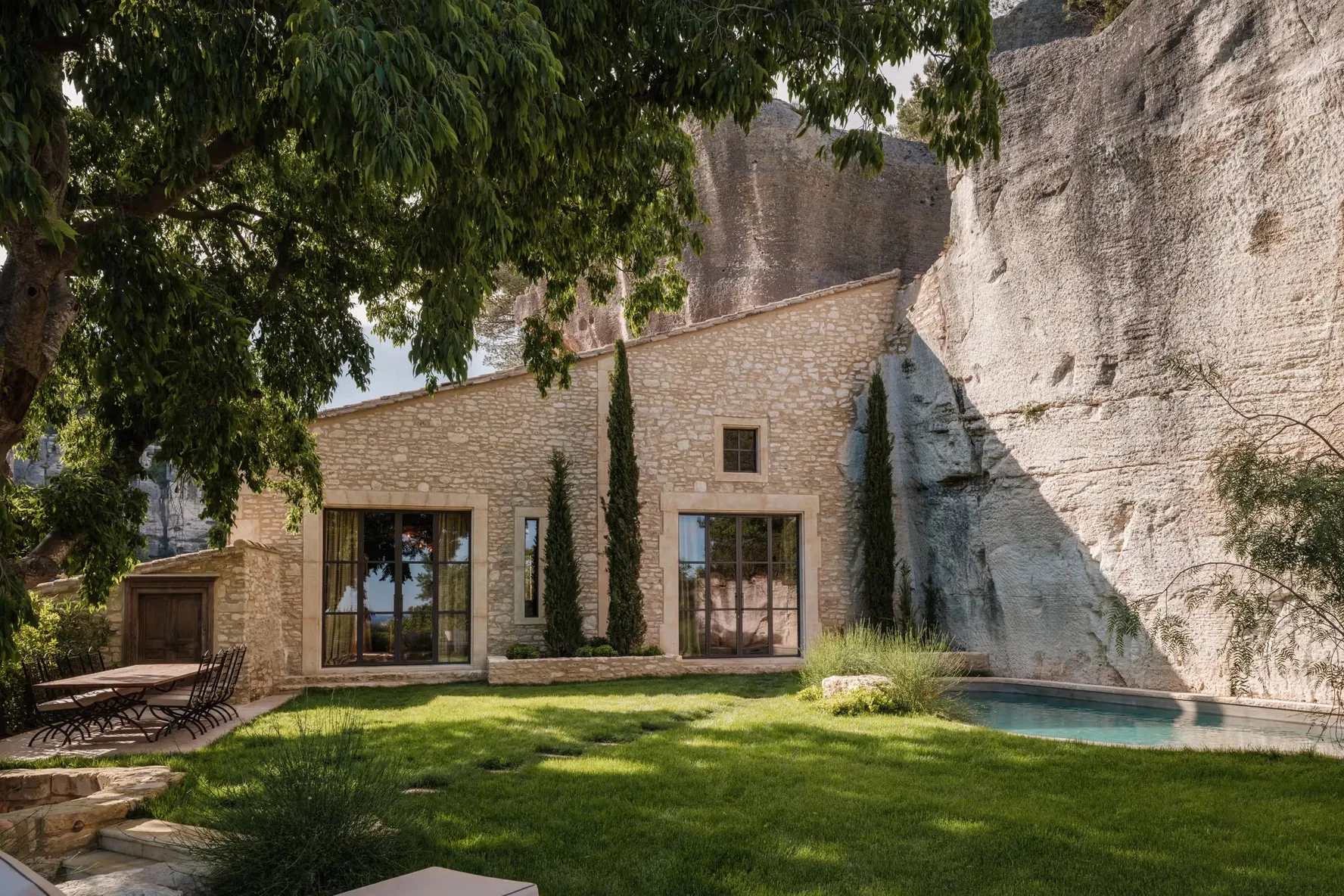
A cave-walled living room cut into the rock below Les Baux. Photo: La Bergerie
Provence is one of the most photographed corners of France. The name covers lavender plateaus and Roman cities, the vineyards of the Luberon and the pale rock of the Alpilles, villages an hour from the sea and others that look almost onto it. Where you stay decides which Provence you get.
Here you’ll find hotels with most of a century behind them, working vineyard estates, and private houses to rent. What they share is a sense of place strong enough to transport you into Provence, and ensure it never fully leaves you, even after you’ve left.
The Luberon
This is the Provence of the imagination: hill villages of honey-colored stone, vineyards running to the horizon, and morning markets under the plane trees. The land folds and rises between Gordes and Bonnieux, ochre in places and green in others, and the pleasure of it is the slowness. It is the part of the region most people picture first, and the easiest to lose a week in.
La Bastide de Gordes
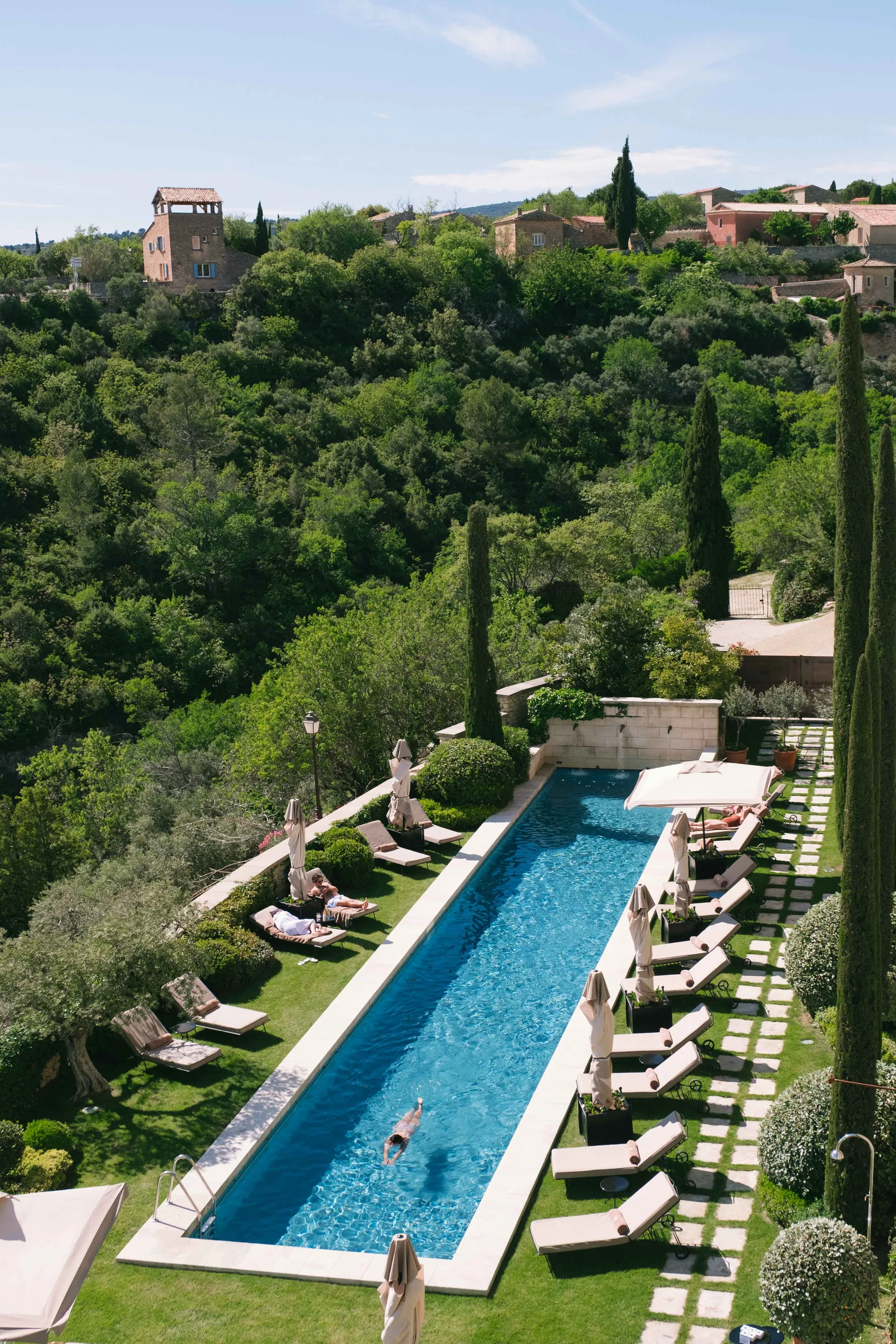
Built into the hilltop of Gordes, the most photographed of the Luberon’s villages, its terraces and pools are cut into the cliff above the valley. It belongs now to the Airelles collection, with a spa carved into the rock and elevated gastronomic restaurants. This is the grand option in the Luberon, and the one to book for the setting itself.
Terraces and pools cut into the cliff above the valley at Gordes. Photo: Airelles
Capelongue
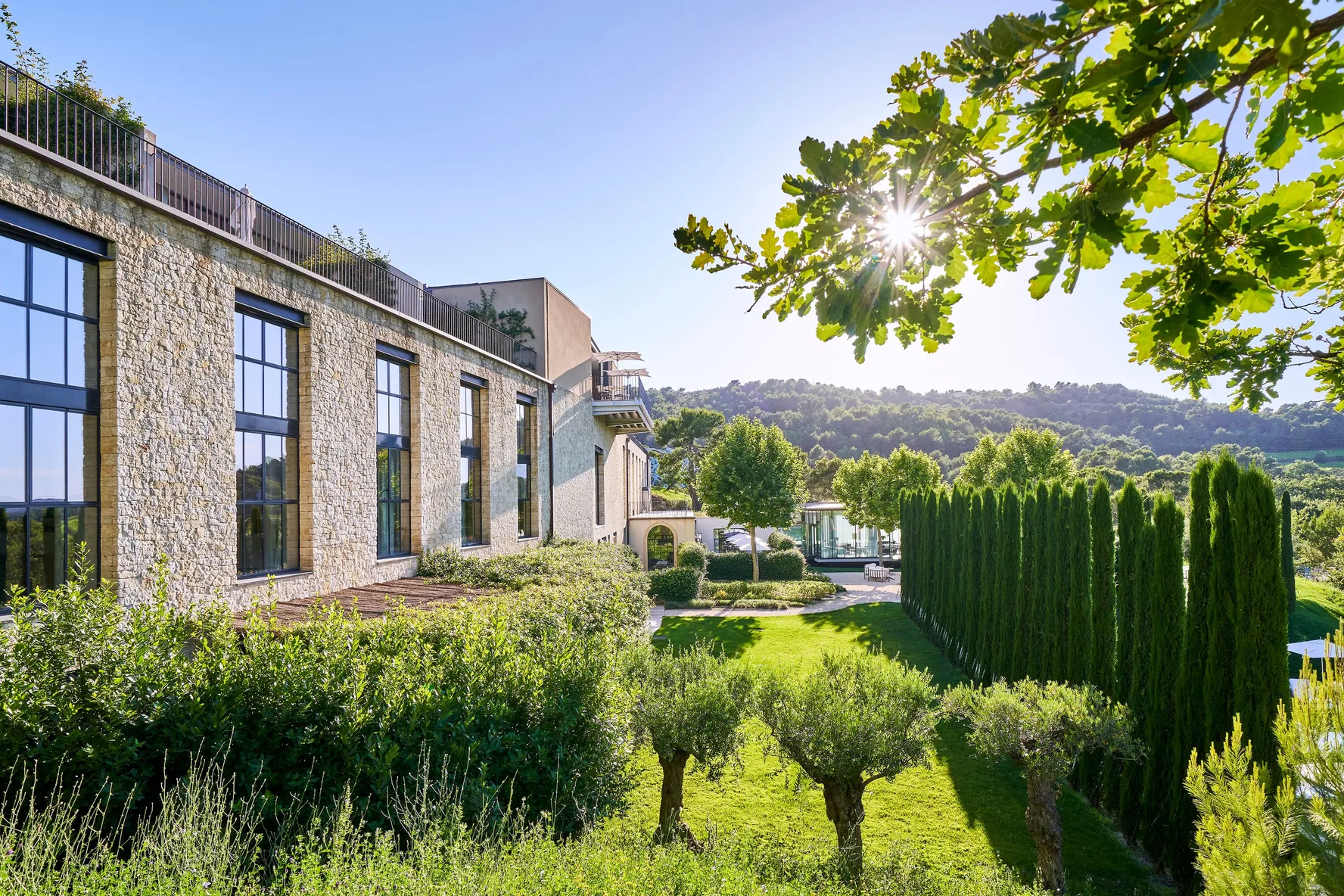
A few valleys south, above the village of Bonnieux, it is arranged like a small town of its own, low stone buildings and gardens looking across the Luberon toward Roussillon and Mont Ventoux beyond. Part of the Beaumier group, it is the more relaxed of the two, with a kitchen built around its own kitchen garden and a pool positioned for the late sun. Come for the long view and the quiet.
Low stone buildings and gardens above Bonnieux, looking across the Luberon. Photo: Beaumier
La Bastide de Marie
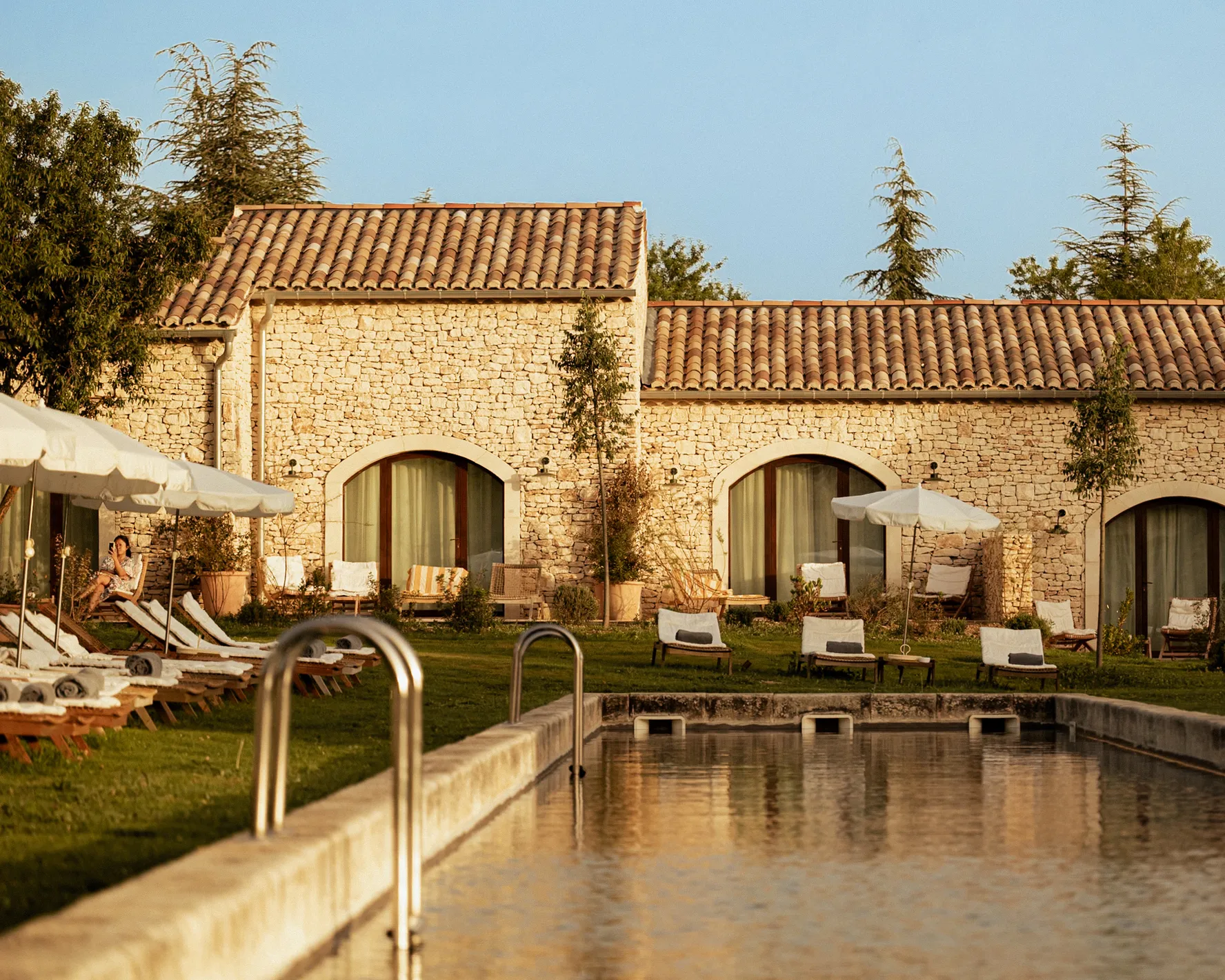
Between Ménerbes and Bonnieux, it sits in the middle of its own vineyard, a small maison run more like a private house than a hotel. There are only a handful of rooms, and the wine on them is the estate’s own. It is the intimate choice, for travelers who would rather feel like houseguests than guests.
A small stone maison and pool between Ménerbes and Bonnieux. Photo: La Bastide de Marie
The Alpilles
West toward Arles, the Luberon’s greenery gives way to the Alpilles, a low range of white limestone and olive groves that Van Gogh painted during his year at Saint-Rémy. It holds one of France’s great restaurants, and most of Provence’s finest private houses.
Baumanière
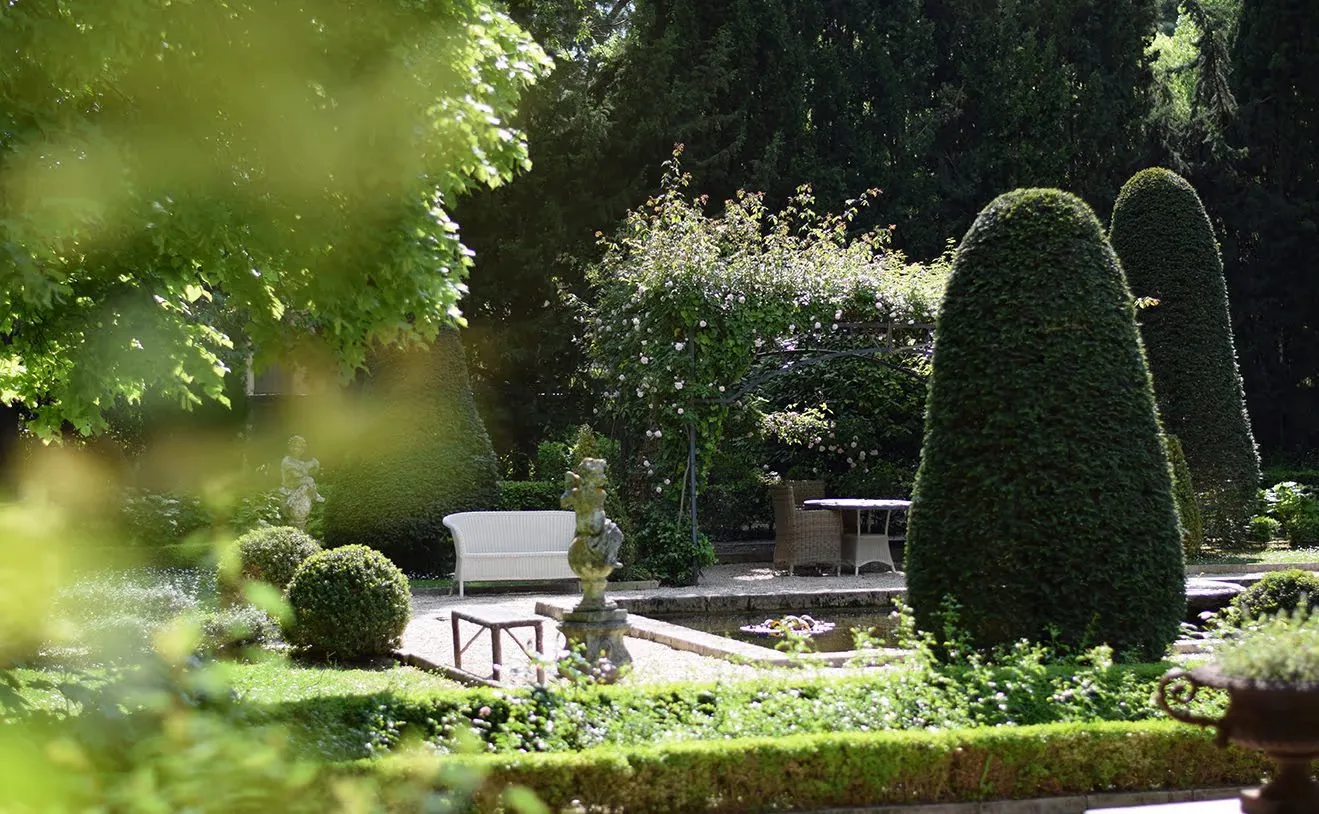
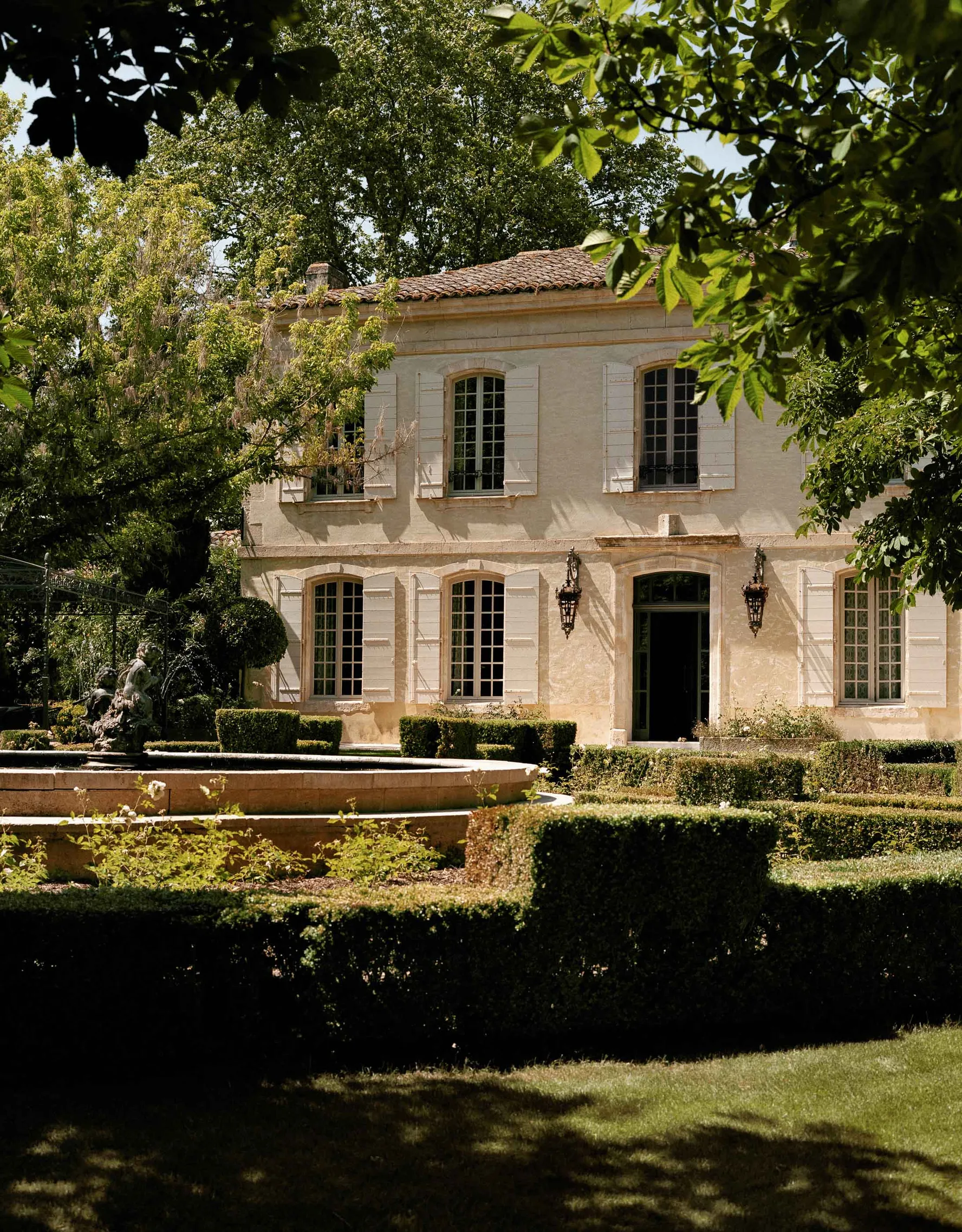
At the foot of Les Baux-de-Provence, in the rocky valley known as the Val d’Enfer, it has long been a benchmark for Provençal hospitality. Its restaurant, L’Oustau de Baumanière, is one of the country’s historic three-Michelin-star addresses, today in the hands of chef Glenn Viel. The hotel itself spreads across several stone mas with gardens, pools, and a spa, a Relais & Châteaux property that has aged into an institution.
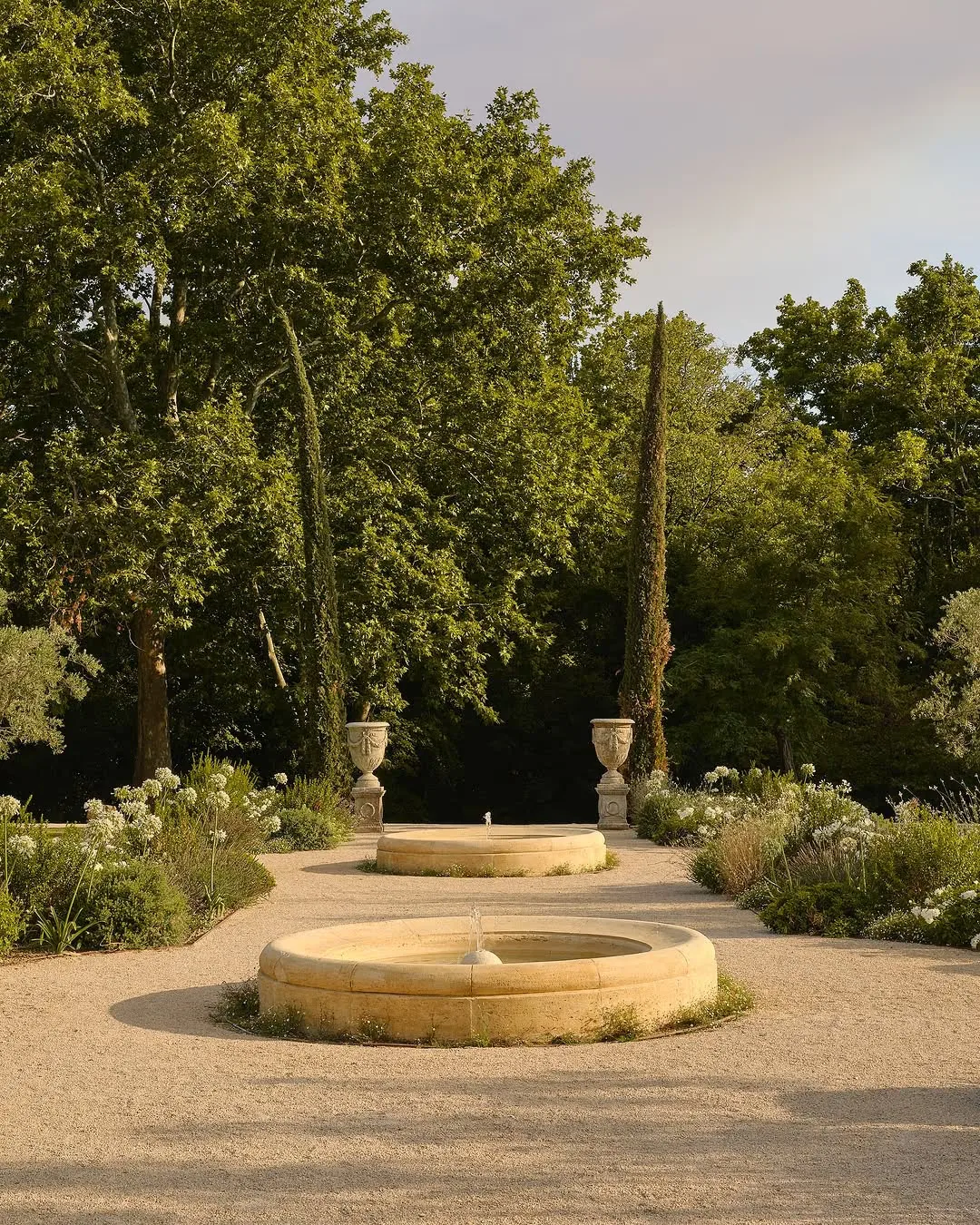
The gardens at Baumanière, at the foot of Les Baux-de-Provence. Photo: Baumanière
La Bergerie
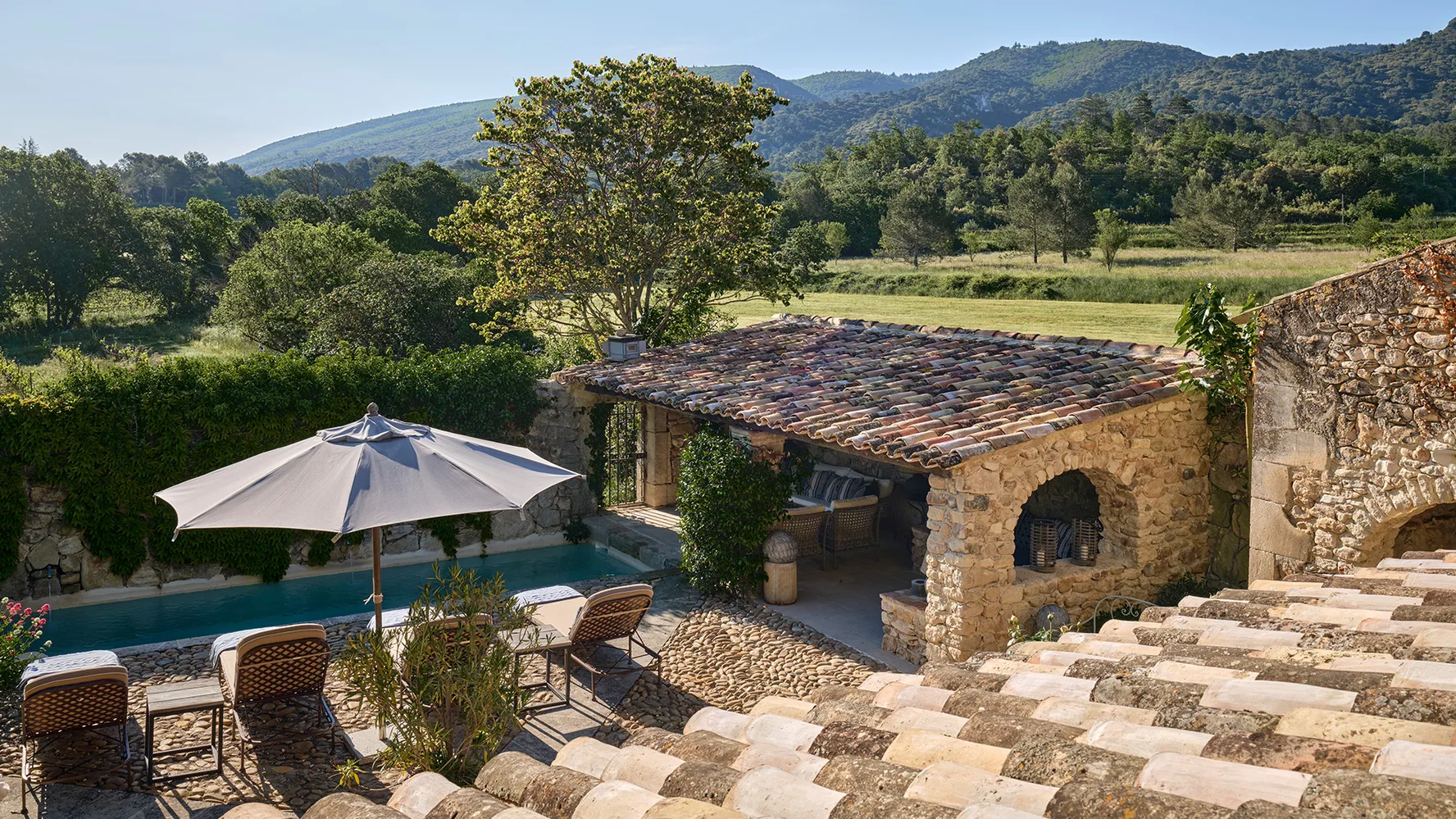
Below Les Baux, it is a former shepherd’s shelter cut into the rock beneath the village, four bedrooms behind limewashed walls, with an indoor pool and an outdoor one. It belongs to Les Domaines de Chabran, the same Alpilles collection as Le Mas de Chabran, and is taken as a whole house.
A former shepherd’s shelter cut into the rock below Les Baux. Photo: Les Domaines de Chabran
Le Mas de Chabran
On the edge of Maussane-les-Alpilles, it is the larger of the two, an 18th-century olive mill turned eight-bedroom villa, with art on the walls and a heated pool among the olive trees. Like La Bergerie, it is rented whole, which makes either one the choice for a family or a group settling in for a week.
An 18th-century olive mill turned villa on the edge of Maussane-les-Alpilles. Photo: Les Domaines de Chabran
Château d’Estoublon
Near Fontvieille, it is a 17th-century château on a working estate that has made wine and olive oil since 1489. Now part of Airelles, it is available only as a private buyout: ten suites for up to twenty guests, with a private chef, butlers, and the run of two hundred hectares of vines and groves. It is less a hotel than a Provençal estate lent to you for a few days.
Private buyout, rates on request. Book through Airelles.
The gardens at Château d’Estoublon, near Fontvieille. Photo: Airelles
Aix and the Var
South and east, around Aix-en-Provence and into the wine country of the Var, the landscape opens out. The tight villages of the Luberon give way to long vineyard rows, umbrella pines, and the gardens of larger estates, and the pace turns from market-town to country-house. This is Provence with room to spread out.
Villa La Coste
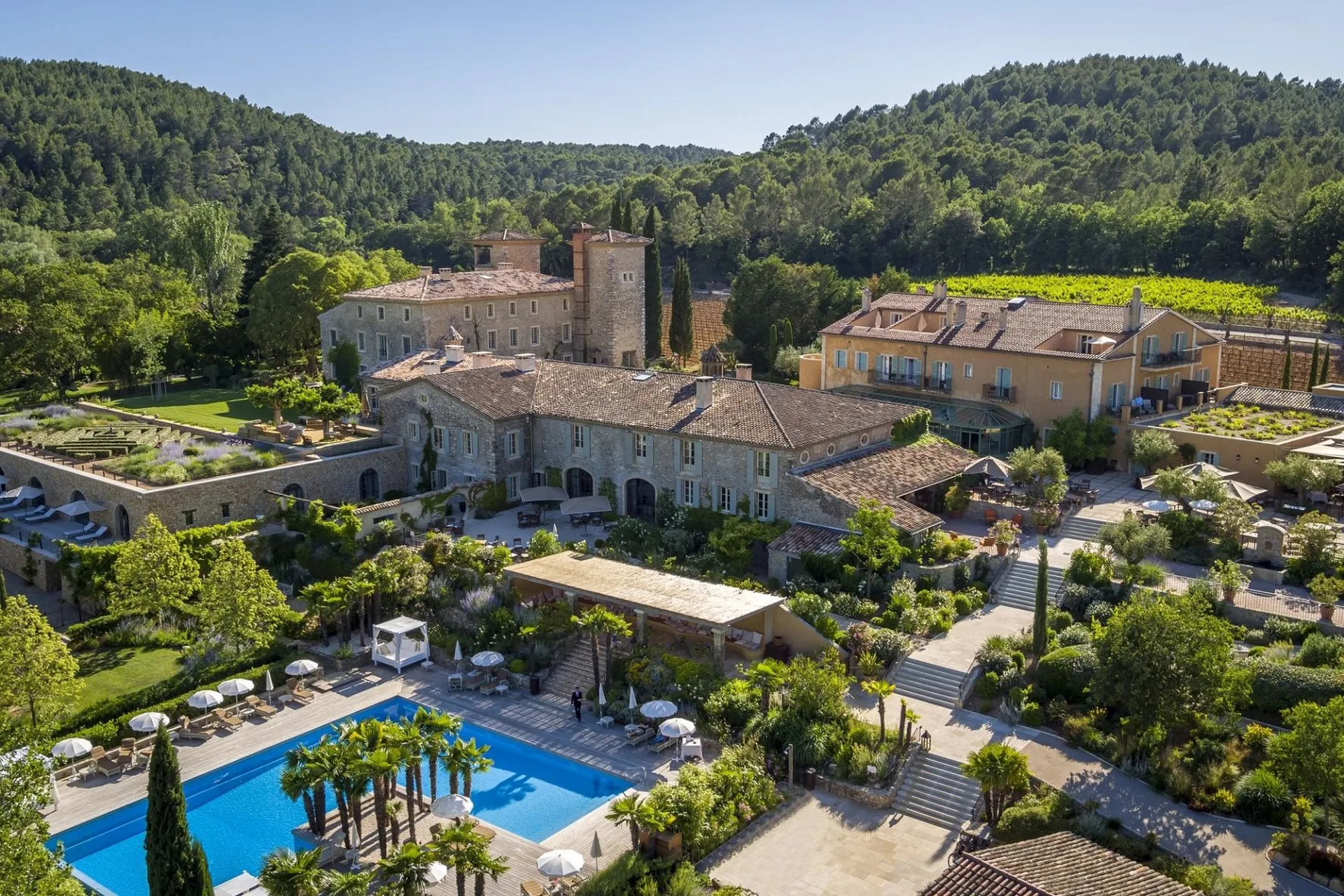
Outside Aix, at Le Puy-Sainte-Réparade, it sits within Château La Coste, a working vineyard that doubles as one of Europe’s great open-air collections of art and architecture. Twenty-eight suites look over the vines, and the estate around them holds work by Tadao Ando, Frank Gehry, Richard Serra, and Louise Bourgeois.
Villa La Coste, among the olive groves of Château La Coste, outside Aix. Photo: Villa La Coste
Château de Berne
Near Lorgues, further east, it is a wine estate turned Relais & Châteaux hotel, its rooms spread across a domaine of vineyards, olive groves, and gardens. There is a spa, a cookery school, and a kitchen built around the estate’s own produce, all within easy reach of the hill villages of the Haut-Var. It is the choice for settling into wine country properly.
A wine estate turned Relais & Châteaux hotel near Lorgues. Photo: Château de Berne
Mont Ventoux and Haute-Provence
North of the Luberon the land rises toward Mont Ventoux, the pale giant that watches over this whole corner of Provence, and on into the lavender country of Haute-Provence. It is quieter up here, a degree or two cooler, the villages further apart and the light cleaner. This is the Provence that rewards going a little farther than most visitors do.
Hôtel Crillon le Brave
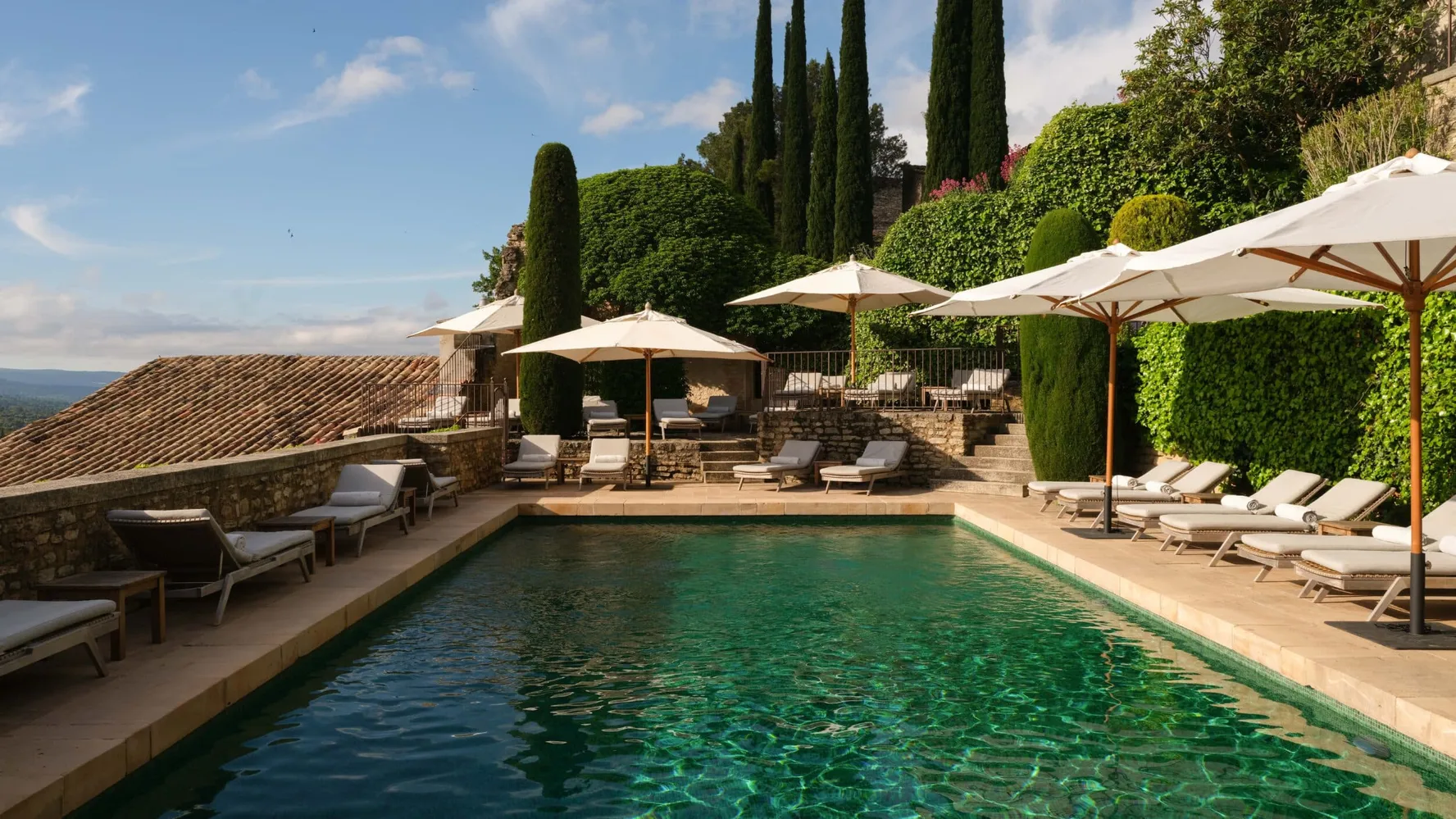
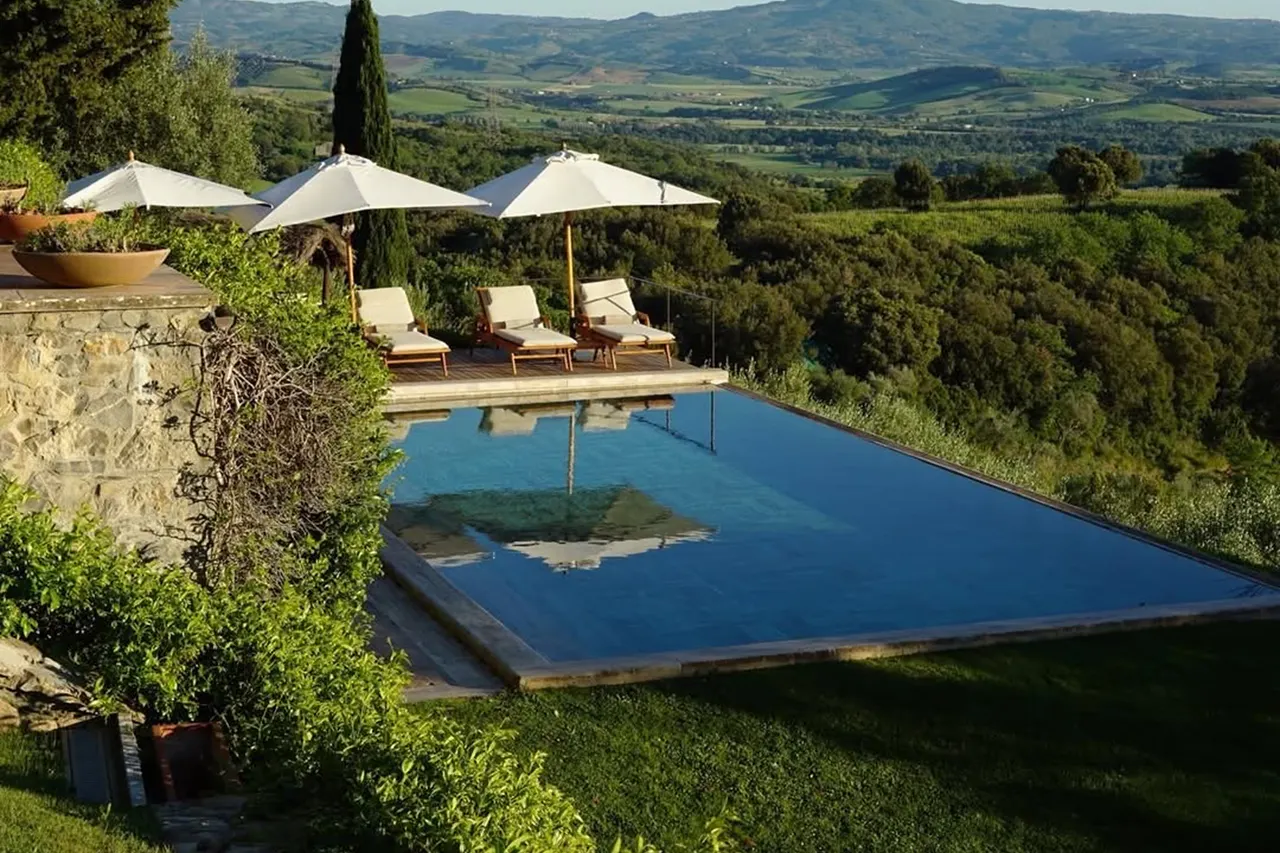
In the village of Crillon-le-Brave, looking across the vineyards to Mont Ventoux, it occupies a cluster of old stone houses linked by gardens and terraces, so that staying feels like having the run of the village. A Relais & Châteaux property, it has the calm of somewhere genuinely rural, with a pool terraced into the hillside and two restaurants. It suits those who want the Provençal village without the crowds of the better-known ones.
The pool terrace at Hôtel Crillon le Brave, below Mont Ventoux. Photo: Hôtel Crillon le Brave
Le Couvent des Minimes
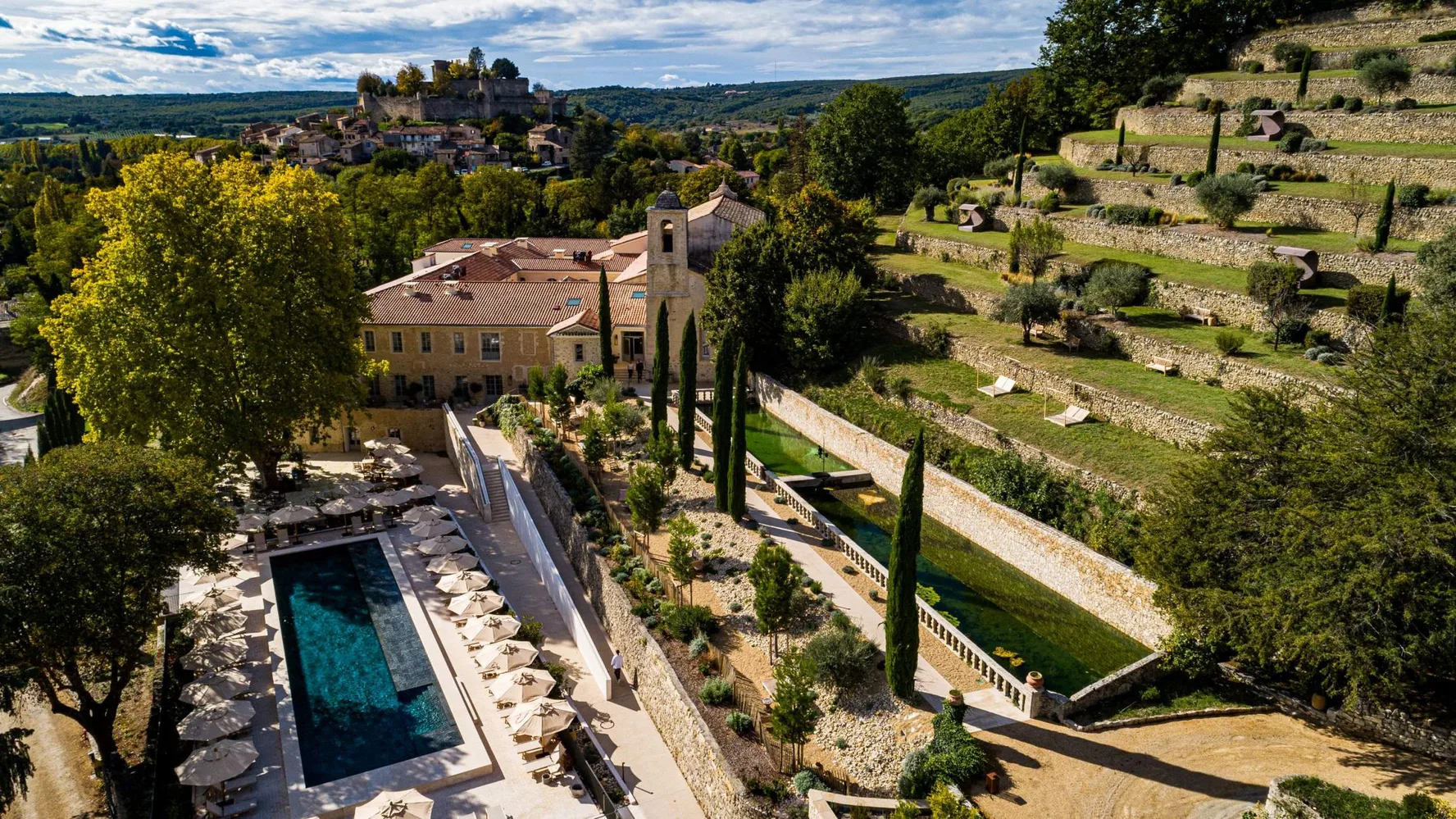
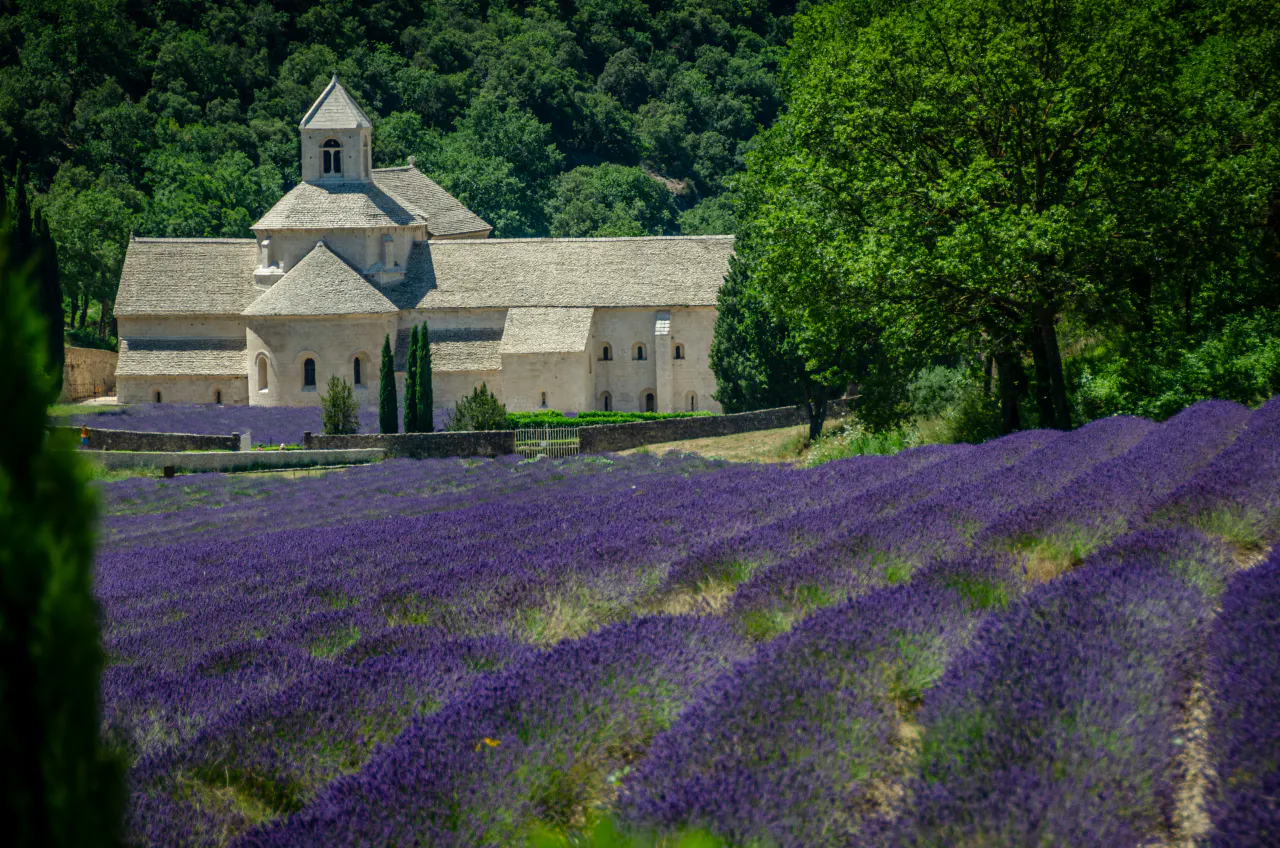
Toward Forcalquier, in the village of Mane, it is a 17th-century convent turned hotel, with a spa run by L’Occitane, whose home is nearby. The gardens are planted with the herbs and lavender of the region, and the setting, deeper into Haute-Provence than most visitors go, is the appeal. This is lavender country, at its best in early summer, and the quiet, restorative end of the list.
A 17th-century convent turned hotel in the village of Mane. Photo: Le Couvent des Minimes
Where Provence meets the Riviera
At its eastern edge, Provence shades into the Côte d’Azur. Two addresses sit on that line, in the hills above the Riviera but Provençal in spirit.
Château Saint-Martin & Spa
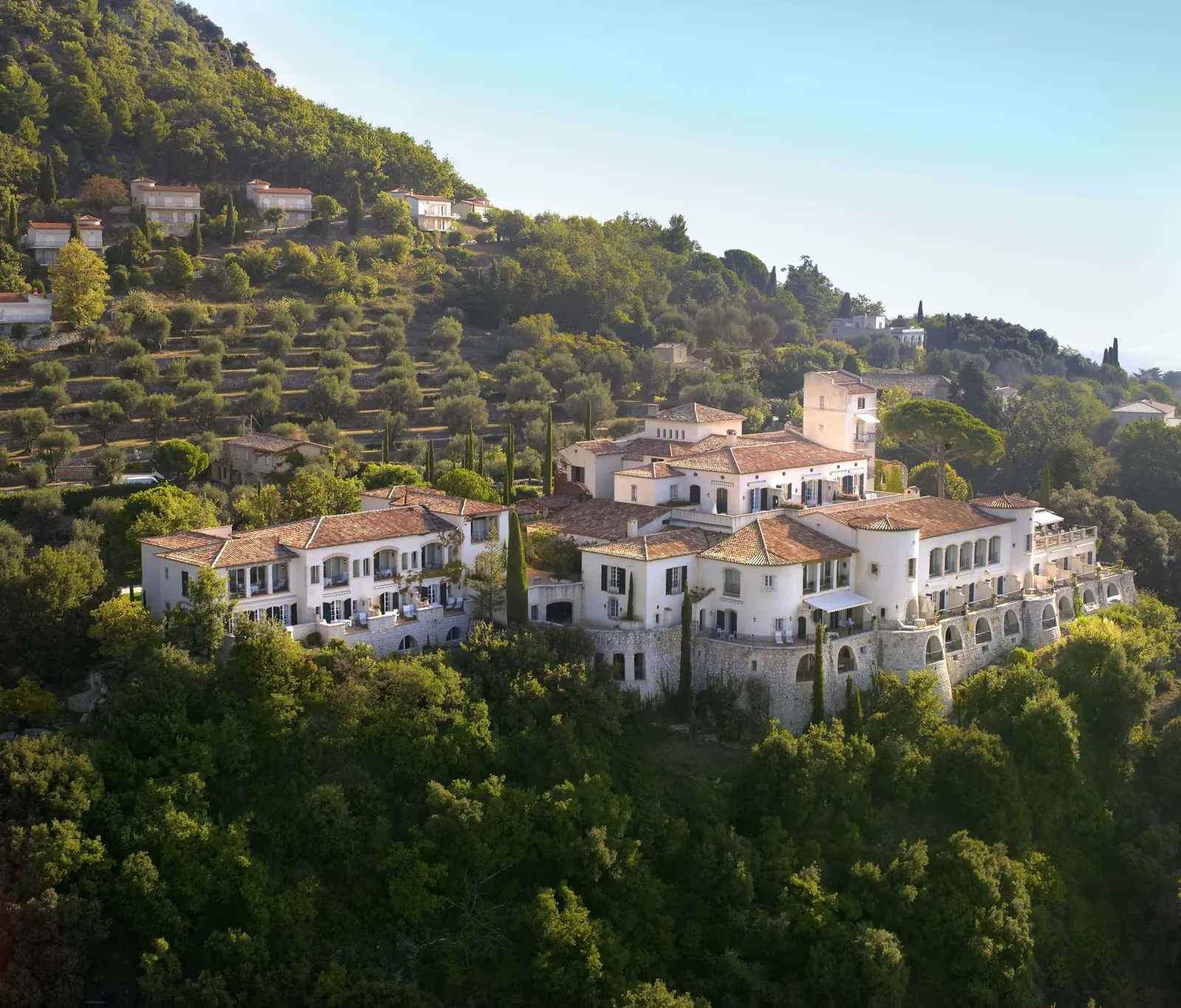
Above Vence, on the site of an old fortress, it looks down over the coast from within its own wooded grounds. An Oetker Collection property, it has a serious spa, terraced gardens, and a pool with a view that runs all the way to the sea. It is grand without being showy, and well placed for the hill villages and the coast alike.
Terraced gardens above Vence, with a view that runs to the sea. Photo: Oetker Collection
La Colombe d’Or
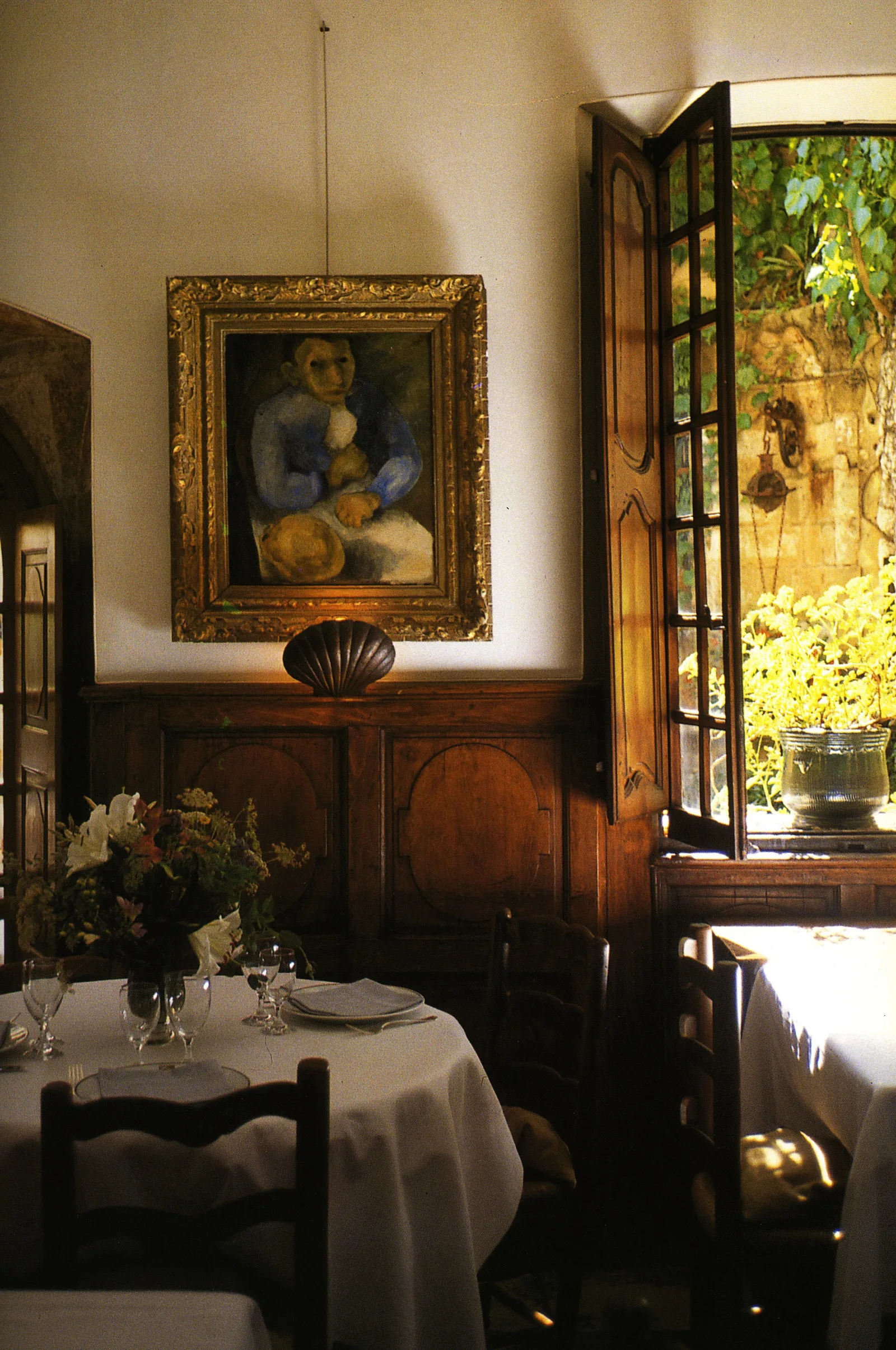
Just along the ridge, in Saint-Paul-de-Vence, it is something rarer: a family-run auberge whose walls hold paintings by Picasso, Matisse, Léger, Braque, and Calder, many left by the artists themselves in place of payment in the years after the war. The rooms are simple by the standards of this list; the point is the art, the terrace, and the sense of staying somewhere with a real history rather than a brand. It is a Provence institution, and it books up far in advance.
The dining room at La Colombe d’Or, in Saint-Paul-de-Vence. Photo: La Colombe d’Or
When to go
Provence keeps a long season, and the shoulders of it are the reward. Late spring brings the countryside into leaf and the markets back to life before the summer crowds; September and early October hold the warmth without the heat, with the vintage coming in and the light turning gold. High summer is glorious but busy, and the lavender, if that is what you have come for, is at its best from late June into July. Whenever you land, the instruction is the same one Provence has always given. Stay put, slow down, and let the rest of it come to you.