Guides
The Best Lavender Fields in Provence, and When to See Them
For a few short weeks each summer, the landscape of Provence turns violet. A guide to the fields of Valensole, the Luberon, and Sault, and how to time them.

The lavender bloom is one of the most photographed events in Provence. The fields flower in the second half of June, peak in the first days of July, and are harvested shortly after. Timing is key, arrive too late and the most famous plateau in France will have been cut back to green.
Provence does not have one lavender season but three, staggered by altitude. Valensole blooms first and goes first. The Luberon follows, its fields scattered between the hill villages. And the plateau around Sault, at 765 meters, typically holds its color into August, closing the season with a harvest festival in the middle of the month.
When to go
For Valensole, the window is late June through the first week of July. The harvest usually begins in the second week and moves quickly; a field that is violet on a Tuesday can be gone by the weekend. Travelers arriving later in July should reroute to Sault, where the altitude delays the bloom by several weeks.
The best time to go is early in the morning or later in the evening, for fewer people, cooler air, and the best light; the middle of the day, roughly eleven to five, brings the heat and the tour buses.
Valensole, the famous plateau
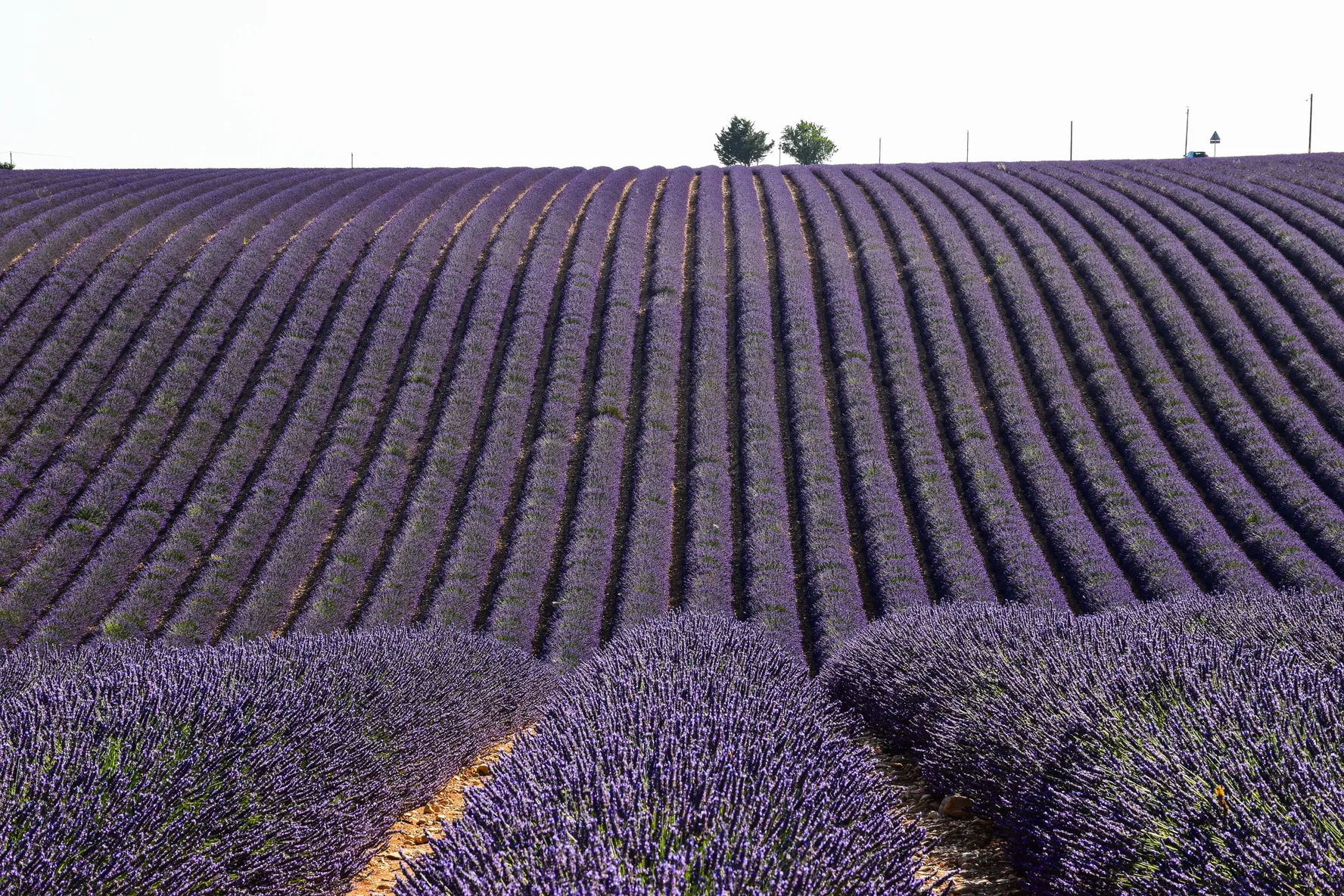
The Valensole plateau is the postcard, long violet rows running to the horizon, wheat alongside, a stone farmhouse placed as if it were in a painting. Most of the famous images are made along a single road, the D6, officially the Route de Manosque and increasingly signposted as the Route de la Lavande, which crosses the plateau with fields on both sides and pull-offs along the way.
Three growers anchor the road, all within about a kilometer of one another. Terraroma is a fourth-generation family operation producing lavender, almonds, honey, and olives, with a distillery and shop facing its own fields. Lavandes Angelvin has farmed the plateau for four generations as well, and the rows opposite its car park are among the most photographed in Provence. Domaine les Grandes Marges completes the trio a few minutes further along. All three keep shops open daily through the season.
The first field to come into view will likely be the one at the pin marked Champ de Lavande à Valensole. The rows opposite are often identical and nearly empty. The fields continue for kilometers, and the best stop is usually the one you have to yourself. For provisions, Les Cousins en Provence serves drinks and snacks, and the stand beside it sells oils and dried bunches. You can also head to any of the stops along the way to get a lavender ice cream before you go.
Beyond the main road
There is more to discover for those who venture off the D6. The small roads between Valensole, Puimoisson, and Riez pass field after field with no bus parking and often no other visitors at all, and the same is true heading south toward Montagnac-Montpezat and Quinson. Drive in any of these directions and enjoy the pleasure of the back roads, pulling over at whichever field presents itself. You will more than likely have it completely to yourself.
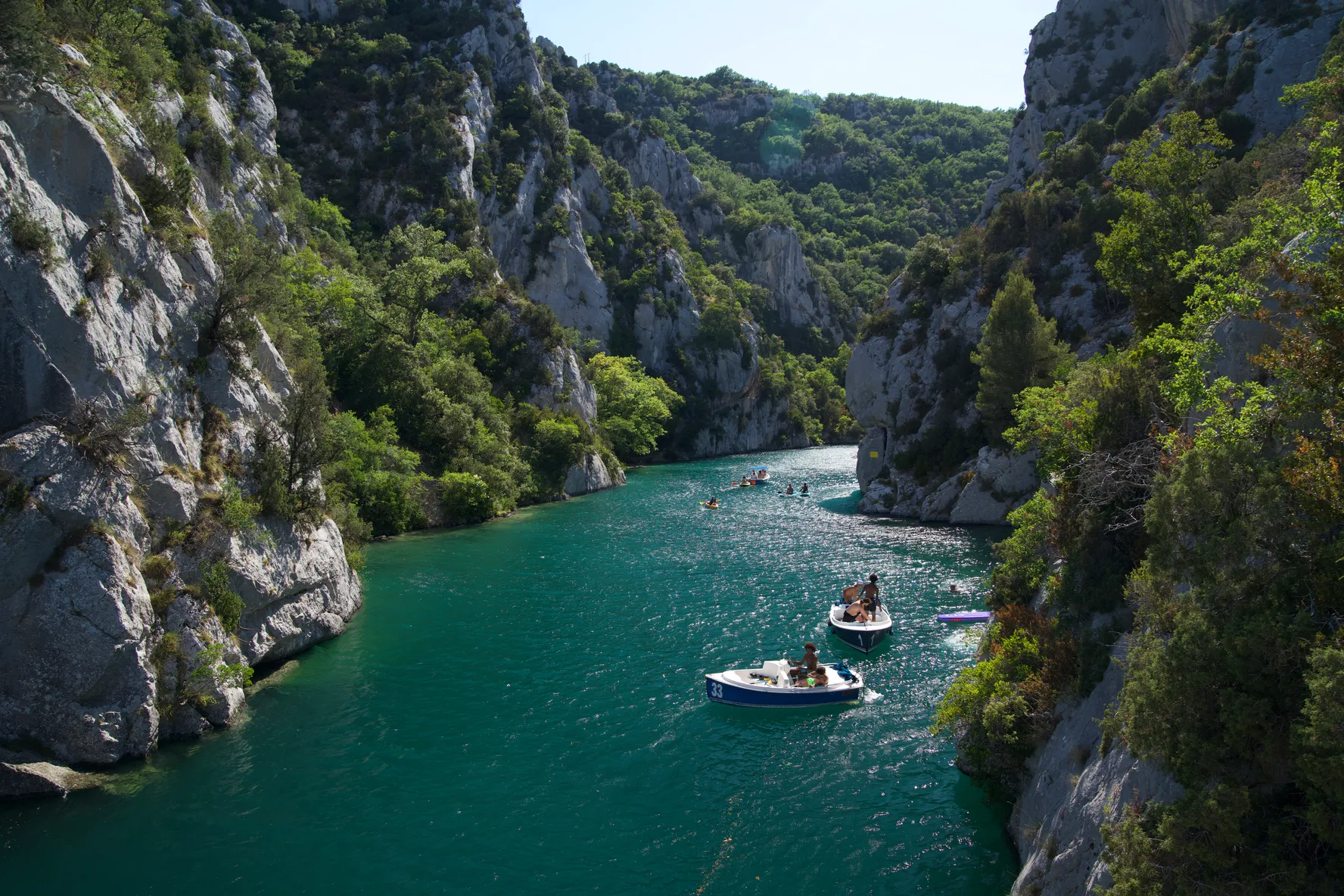
The lavender ends where the Verdon begins, around an hour from the Valensole fields, and the two pair naturally into a single day. Beyond the fields lie the Gorges du Verdon and a chain of lakes: Lac de Sainte-Croix, the largest, and the smaller lakes at Esparron-de-Verdon and Quinson, both a shorter drive from the fields. Saint-Laurent-du-Verdon is a village of barely a hundred people, surrounded by lavender and wheat. And Quinson itself, a small town beside the lower gorge, holds two reasons to linger: Ferme Mistral, a goat farm whose cheese alone justifies the detour, and the Relais Notre Dame, which serves lunch and dinner daily.
The Luberon
The Luberon’s fields are scattered rather than continuous, tucked between the hill villages, and the most famous of them belong to a monastery. Abbaye Notre-Dame de Sénanque, founded in 1148 in a fold of the hills outside Gordes, is still home to a small community of Cistercian monks. The lavender is planted, tended, and harvested by them, with the cut flowers sold in the abbey shop. The fields are closed to visitors out of respect for their work, but they are fully visible from the approach, and the abbey in bloom is one of the most photographed scenes in France. The monks themselves put the best viewing between June 20 and July 10, with the harvest following in late July and early August.
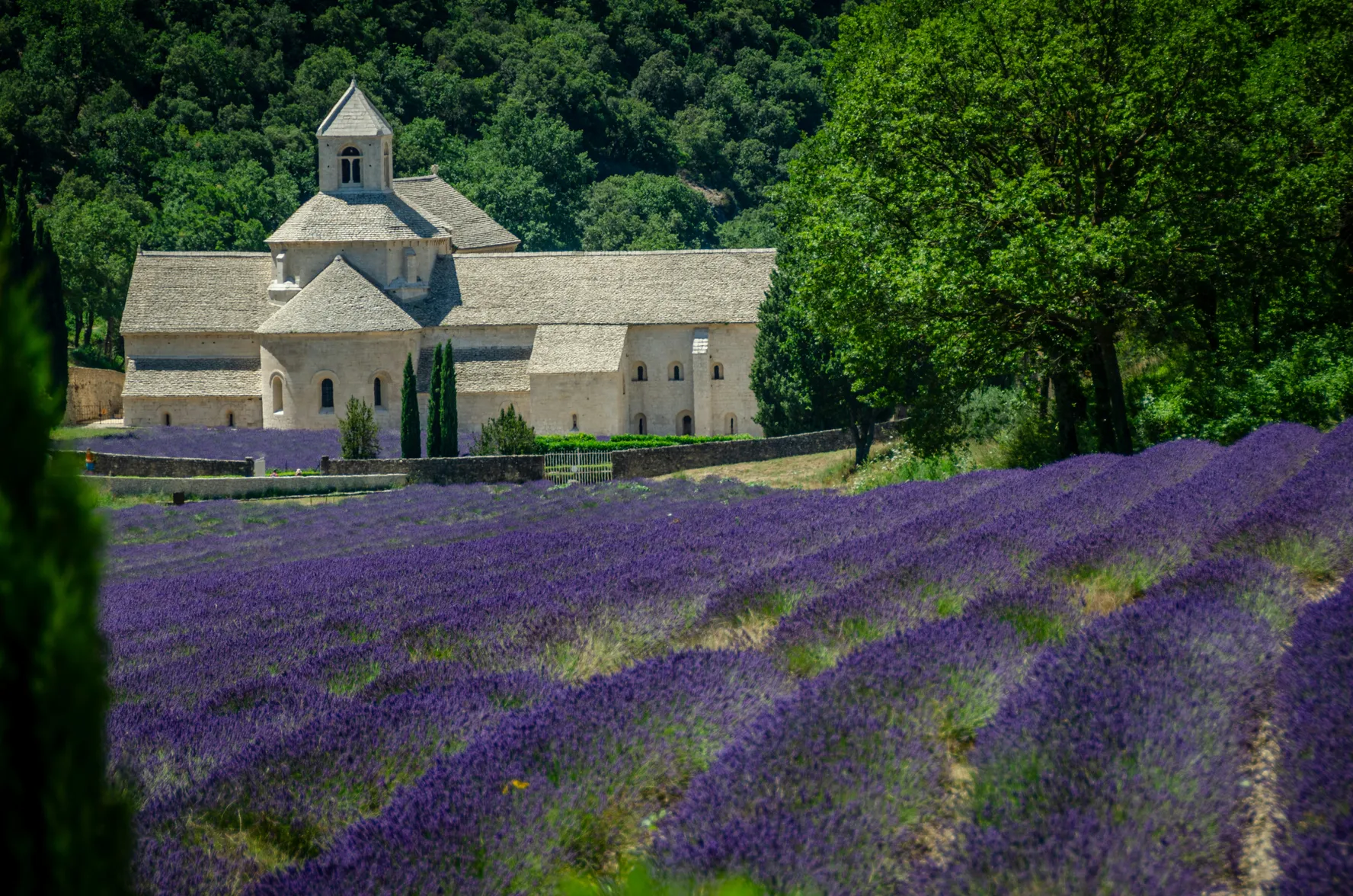
The rest of the valley lends itself best to wandering. The best fields cluster between Gordes, Lacoste, and Bonnieux, and around Rustrel to the east. Outside Apt, the Distillerie Les Agnels, open daily in season, shows how the crop becomes oil, with its own fields alongside. The hillsides around Simiane-la-Rotonde, in the upper Luberon, are a bit farther out. And above Apt sits Saignon, a village built on a rock with lavender at its feet; the short climb to the Rocher de Bellevue looks down over the fields, one of them with a small stone cabanon at its center.
Sault, the late season
Sault closes the season. The village sits at 765 meters, where the altitude delays the calendar: the bloom arrives in mid to late July and the harvest runs into August, weeks after Valensole has been cut. The landscape is different, more rural, less composed, with smaller fields, working farms, and far fewer people. On August 15 the village holds the Fête de la Lavande, its harvest festival, now in its thirty-ninth year, with free entry.
The two best stops in the area are Aurel and Ferrassières. Aurel, a hilltop village just north of Sault, is encircled by lavender, and the field directly below it, a single tree standing in the rows, is the best one to photograph. North of Ferrassières, the road runs between fields marked by a pair of the dry-stone huts found scattered across this corner of Provence.
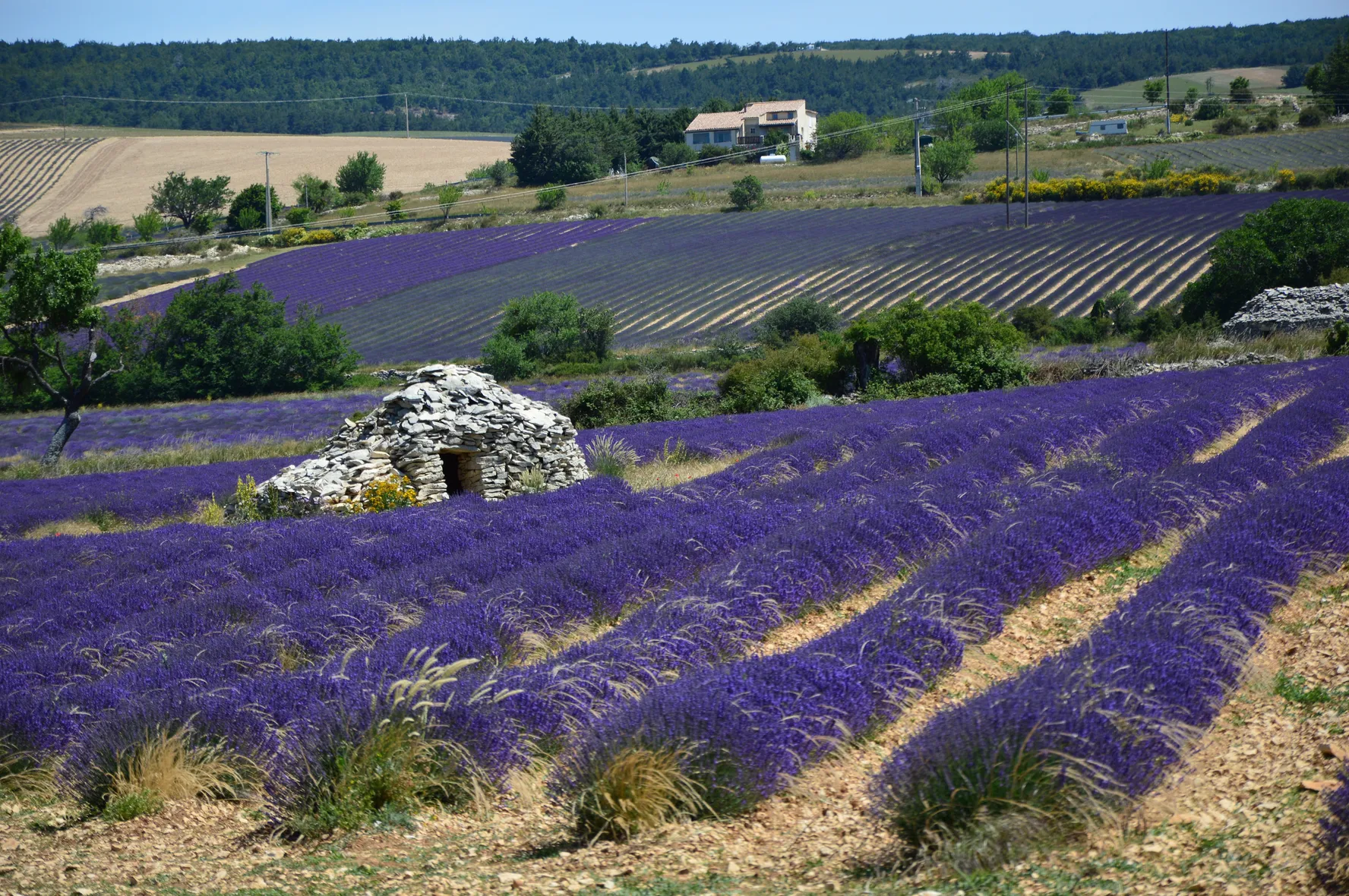
The lavender season in Provence is every bit worth the journey. In summers that now run warmer nearly every year, the best time to arrive is the last week in June, when Valensole is at its fullest and the harvest is still just around the corner.
The first fields will be cut by the first or second week of July and the last by the end of August, as they are every year, and the plateaus will return to quiet farmland until the following June.
Explore our guide to where to stay in Provence, from the Luberon and beyond.