From Chianti to the Umbrian border, the restored castles, wine estates, and village hotels worth planning a trip around.
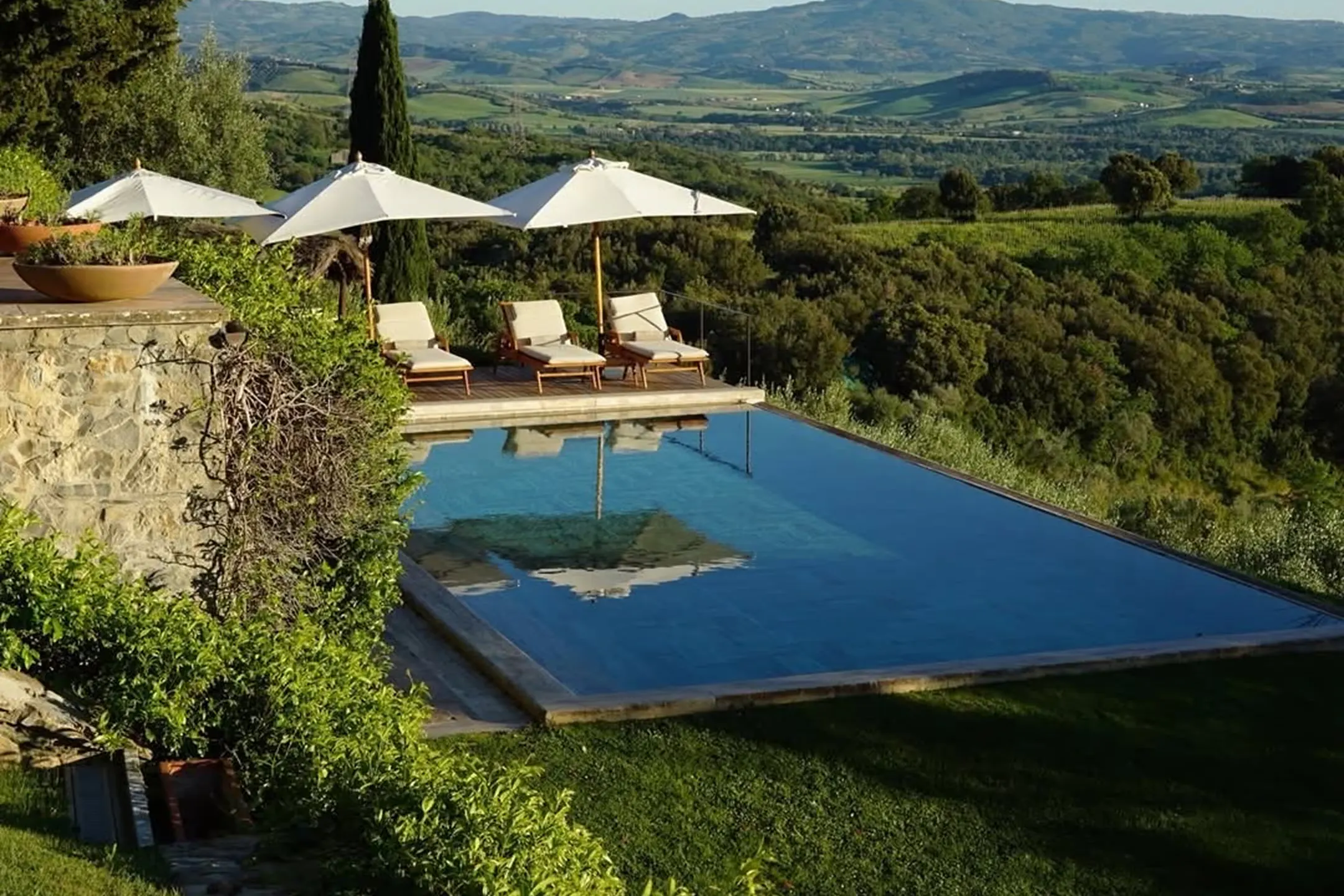
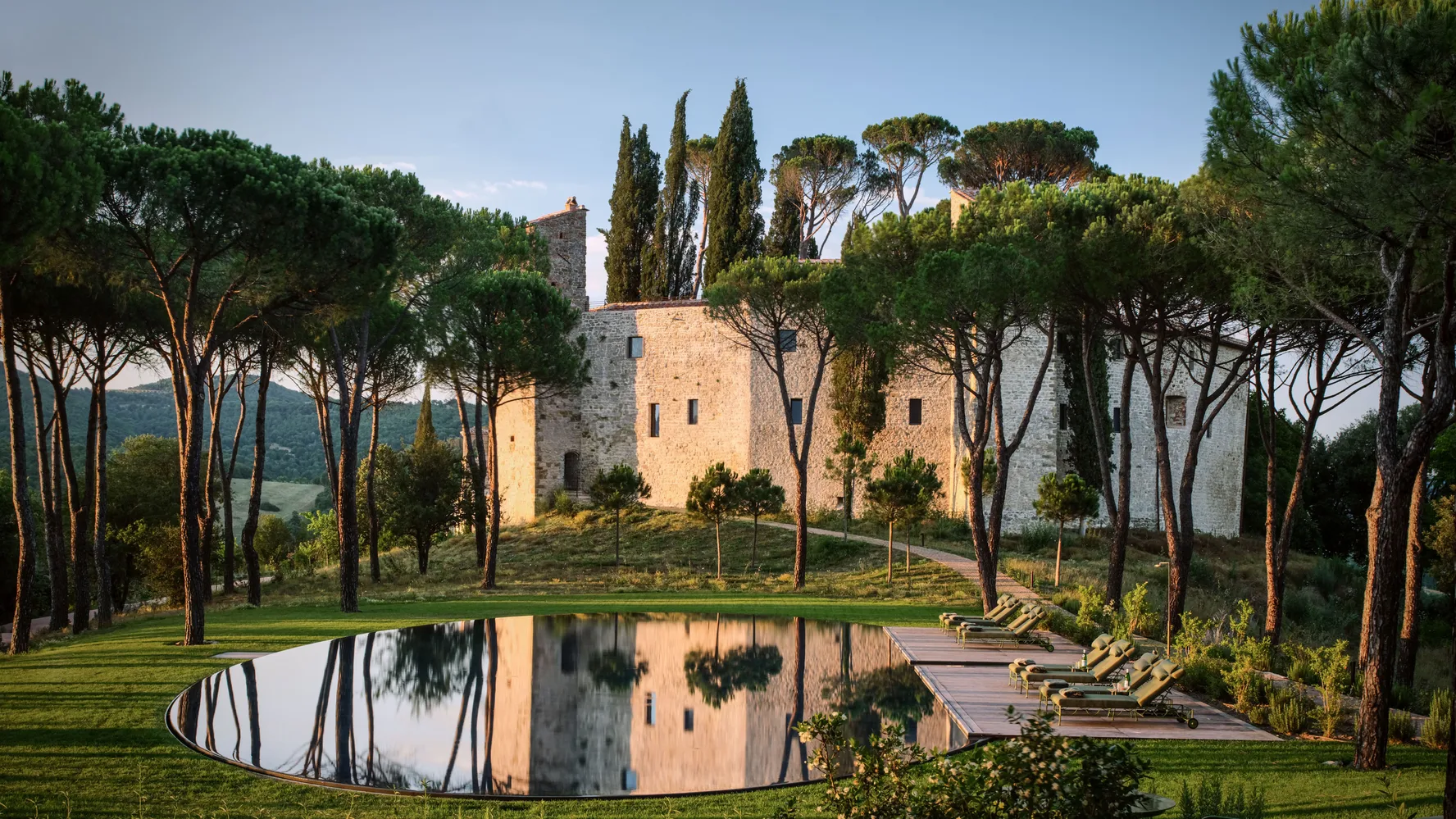
A pool cut into the hillside at Castello di Vicarello, in the Maremma. Photo: Castello di Vicarello
Tuscany and Umbria hold some of the best hotels in Europe, and almost none of them are in a city. They’re in the hills between Florence and Siena, along the wine roads south toward Montalcino, and across the border into Umbria, where a castle estate or a restored village is more often the destination than the nearest town.
Here you’ll find restored castles, working wine estates, and villages brought back from near ruin, most of them by a single family over decades. What they share is a sense of place strong enough that you stop measuring how far you are from anywhere else.
Borgo San Felice
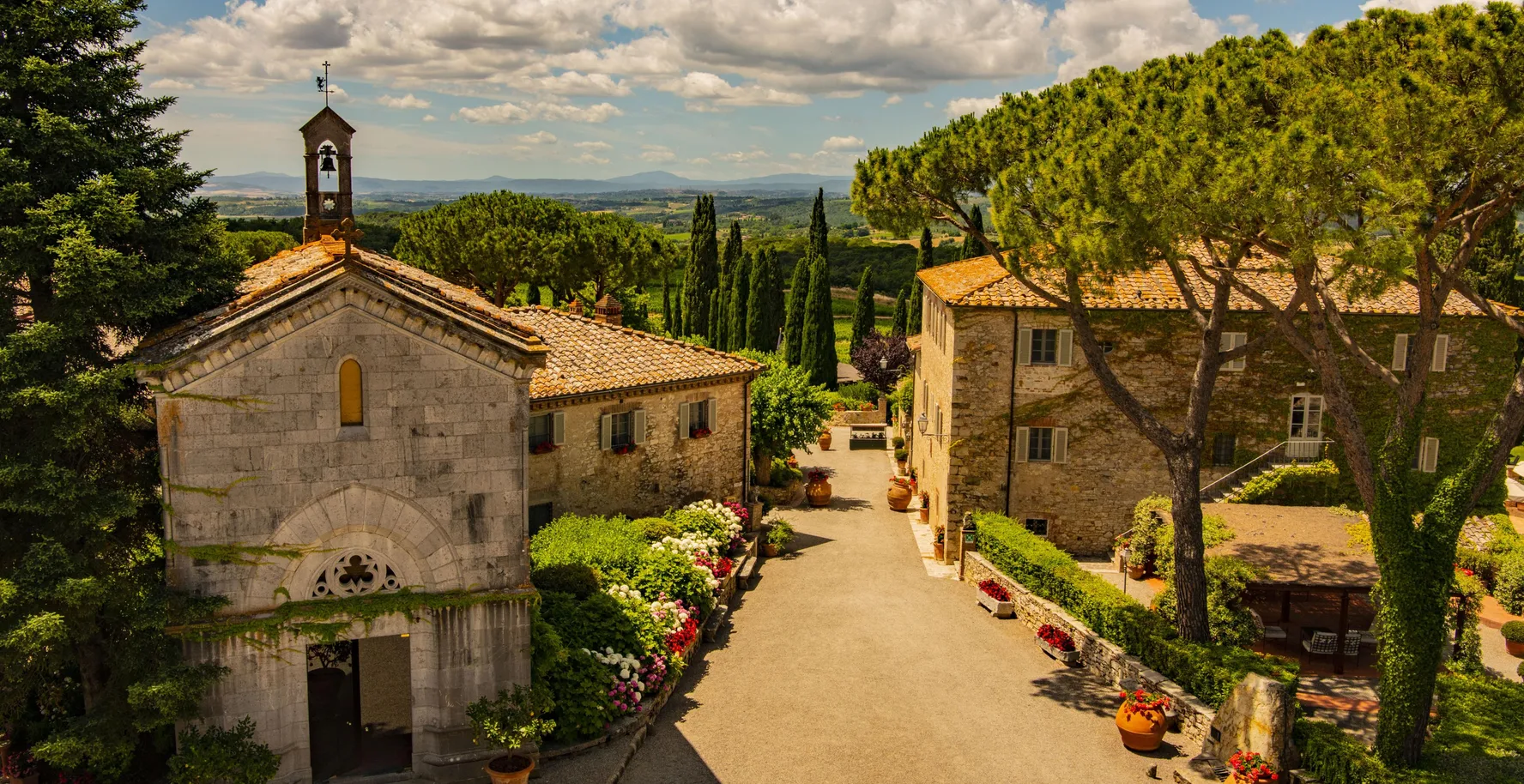
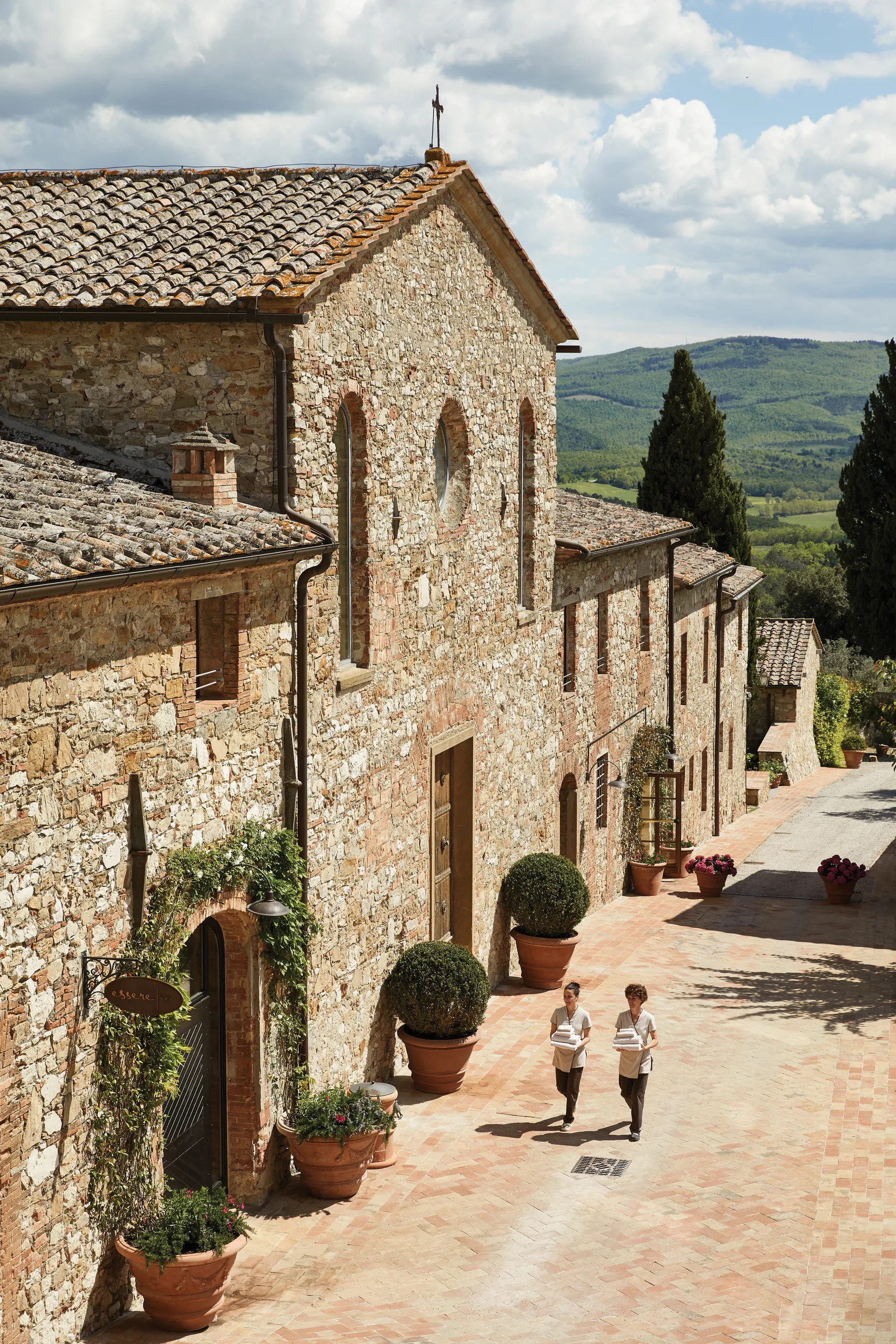
An entire medieval village run as one hotel, down to the small church at its center. The San Felice estate has made wine on this land for more than a thousand years, and the vineyards around the village still produce its Chianti Classico and Vigorello, one of the first Super Tuscans. Guest rooms are set through the old stone houses along the lanes, and the kitchen at Poggio Rosso holds a Michelin star. The village came first, and the hotel was fitted carefully inside it.
A medieval village run as a single hotel, vineyards making Chianti Classico around it. Photo: Borgo San Felice
COMO Castello del Nero
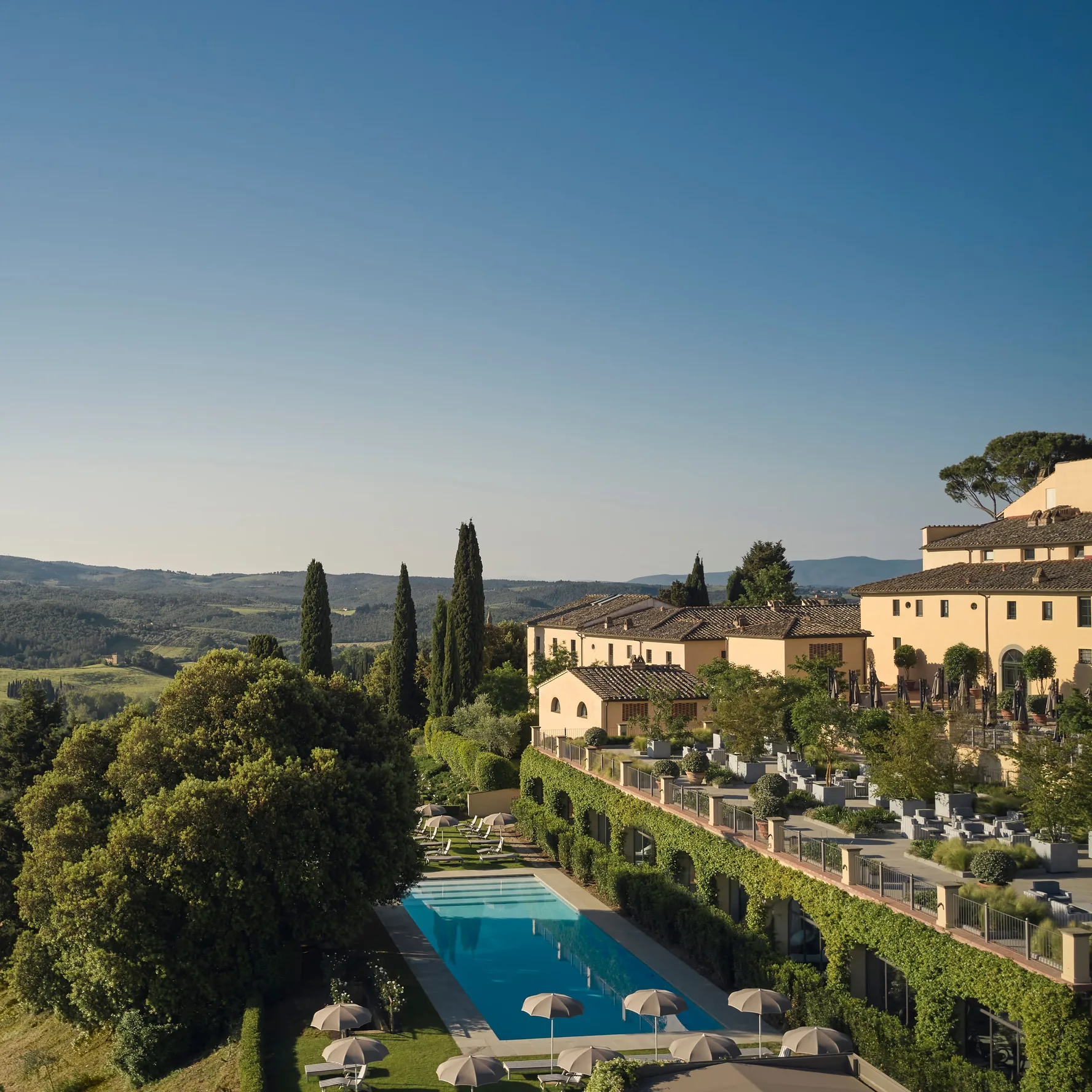
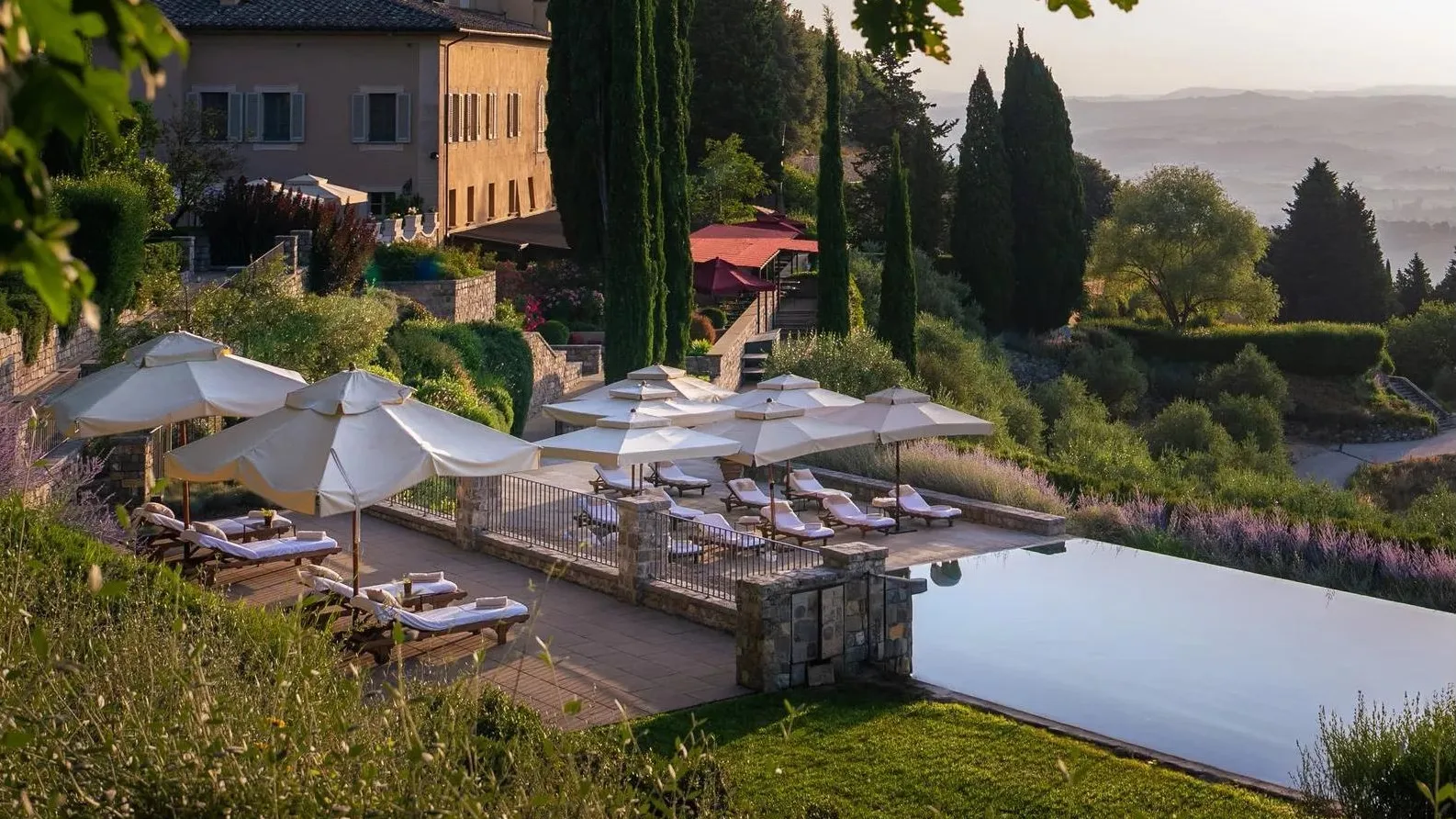
A twelfth-century castle at the center of a large Chianti estate. The frescoes and vaulted ceilings have been left as they were found, there’s a full spa, and a single long pool looks out over the vineyards and olive groves. It’s a historic castle and a modern wellness hotel at once.
A twelfth-century castle and modern wellness hotel at the center of a Chianti estate. Photo: COMO Hotels
Borgo Santo Pietro
A thirteenth-century estate, now part hotel and part working farm. Its three hundred acres of gardens, orchards, and pasture supply the kitchens almost entirely, including Saporium, the estate’s Michelin-starred restaurant. There are around twenty rooms and suites, a spa, and the clear sense that the food and the place are one project. Few hotels take farm-to-table as literally, or as far.
A thirteenth-century estate and working farm supplying its Michelin-starred kitchen. Photo: Borgo Santo Pietro
Castello di Casole, A Belmond Hotel
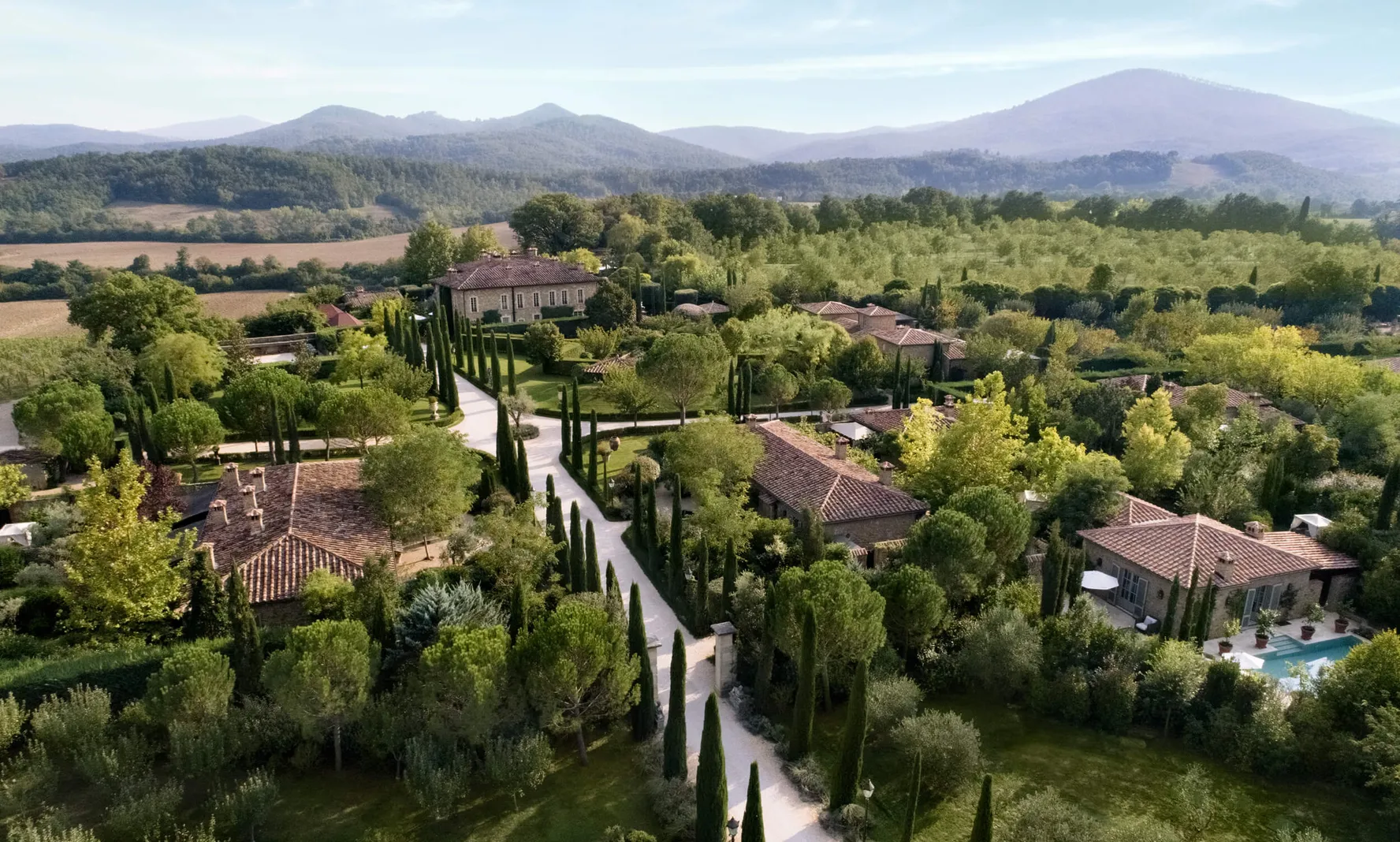
A tenth-century castle on one of the largest private estates in Tuscany, more than four thousand acres of hills, vineyards, and olive groves west of Siena. Belmond runs it as an all-suite hotel, thirty-nine of them in the restored castle and across the grounds, with a long view in nearly every direction. It’s the kind of estate you don’t so much visit as disappear into for a week.
The restored stone hamlet at Castello di Casole, west of Siena. Photo: Belmond
Rosewood Castiglion del Bosco
One of the great Tuscan estates, five thousand acres in the Val d’Orcia restored by Massimo Ferragamo and run as a Rosewood. There’s a Brunello di Montalcino winery, a private golf course, and a medieval borgo at the heart of it with a frescoed chapel and Campo del Drago, a restaurant that holds a Michelin star. Suites are in the restored borgo; villas with their own pools sit out across the hills.
The pool and borgo at Rosewood Castiglion del Bosco, in the Val d’Orcia. Photo: Rosewood
Lupaia
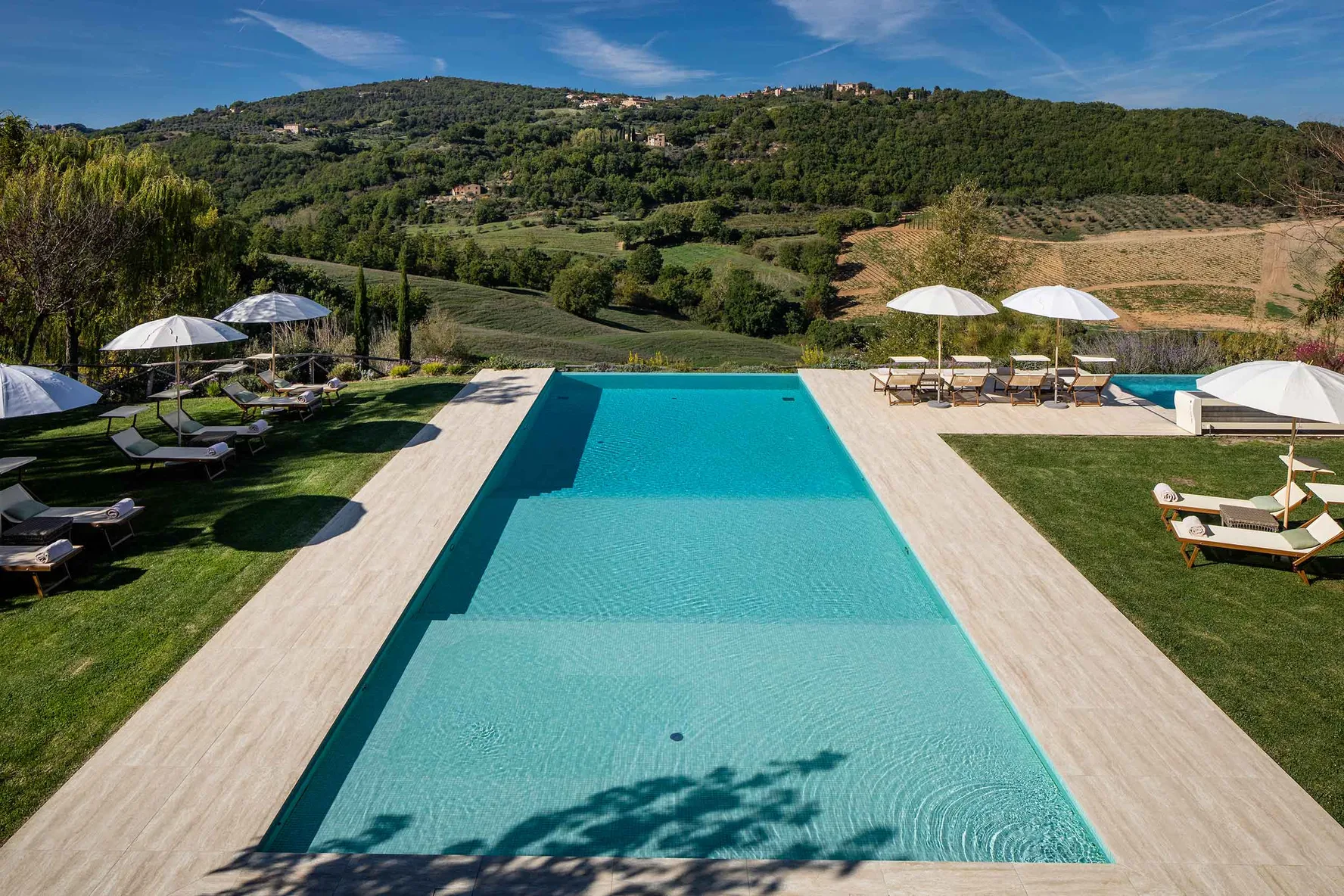
A restored farmhouse on a hilltop near Montepulciano, with ten rooms and a view that runs uninterrupted across the Val d’Orcia. There’s no front desk in the usual sense and no crowd; meals come from the garden and are served where the day suits. It’s the smallest place here, and for some the most appealing for exactly that reason.
The pool at Lupaia, looking across the Val d’Orcia near Montepulciano. Photo: Lupaia
Castello di Vicarello
A restored medieval castle in the Maremma hills, run as an intimate hotel by the family who brought it back to life. There are nine suites, a wine and olive estate around them, two pools cut into the hillside, and almost no one else. The owners spent years building a life in Bali before settling here, and something of that unhurried, handmade sensibility carries through. You come for privacy and get more of it than almost anywhere.
One of the two pools cut into the hillside below the castle. Photo: Castello di Vicarello
Il Borro
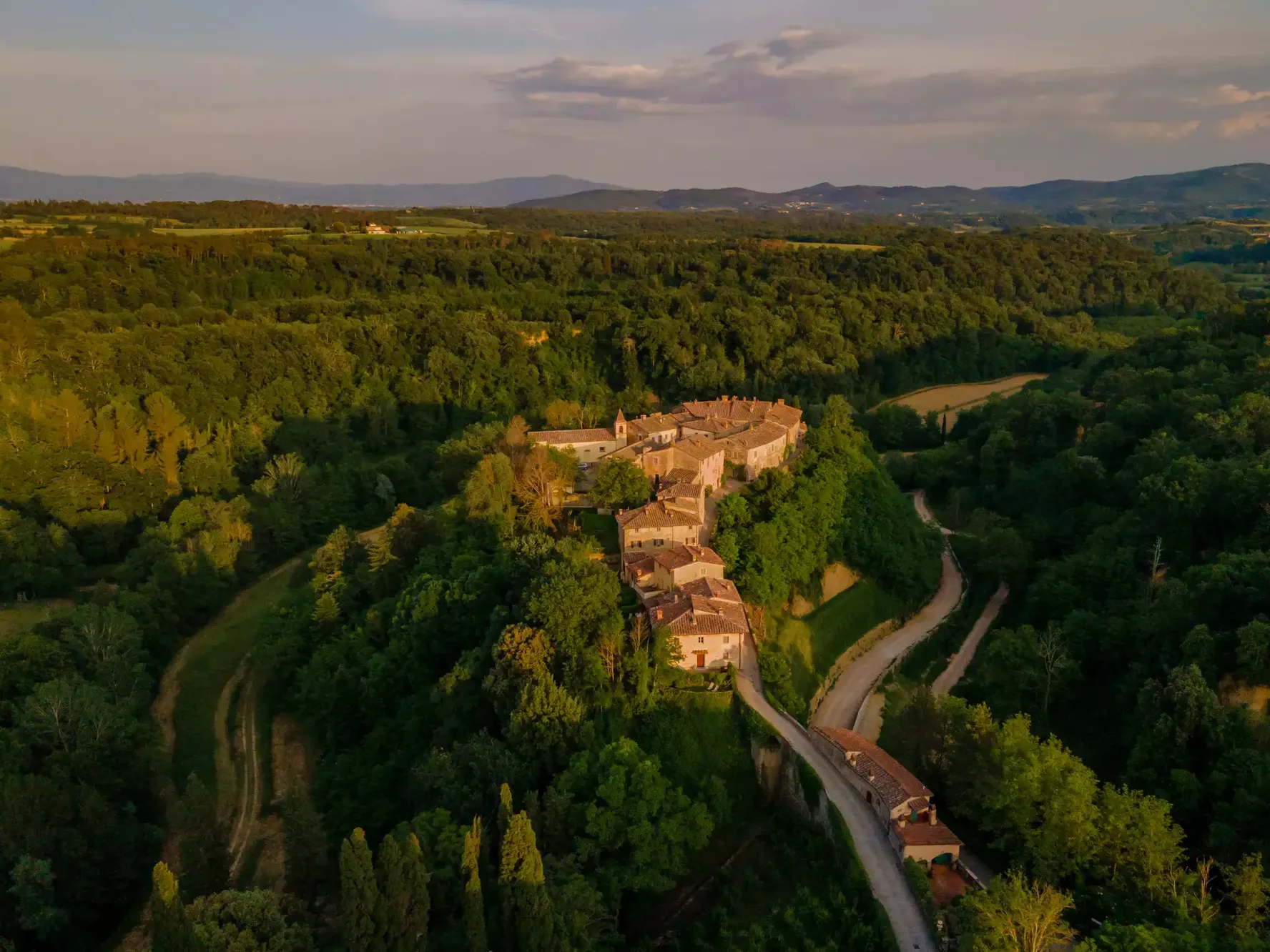
A restored medieval village near Arezzo, owned and run by the Ferragamo family, who turned a near-derelict borgo and its estate into one of the most complete properties in Tuscany. The vineyards are farmed organically, the restaurant Osteria del Borro holds a Michelin star, and guests stay in the village houses and suites along the cobbled lanes, with a spa and a frescoed villa on the grounds. It’s a working estate first and a hotel second, which is much of the appeal.
A restored medieval village and organic wine estate near Arezzo. Photo: Il Borro
Castello di Reschio
A thousand-year-old castle across the border in Umbria, on an estate of nearly four thousand acres that one family spent decades restoring before opening the castle itself in 2021. Count Benedikt Bolza, an architect, designed its thirty-six suites and most of what fills them, down to a furniture line made on site. There’s a spa carved into the old cellars, a working stable, and a restaurant, all of it held to a single exacting eye. It’s the most recent of these openings, and one of the most assured.
A thousand-year-old castle on a four-thousand-acre Umbrian estate. Photo: Castello di Reschio
When to go
These hills keep a gentle season. Late spring is green and unhurried, the gardens coming into their own before the summer heat settles over the valleys; September and October bring the grape and olive harvests, cooler evenings, and the clear light that makes the Val d’Orcia look painted. Deep summer is beautiful but hot and busier, so if you can choose, choose the shoulders. Wherever you land among them, the instruction is the same. Stay a while, eat what’s grown nearby, and lose track of the days.