Destinations
Porquerolles, the French Riviera as It Used to Be
Twenty minutes off the coast of Hyères sits a car-free island of vineyards, pine forest, and a museum you enter barefoot. A guide to one of the last quiet places on the French Riviera.

The French Riviera does not have many secrets left. It has scenes, seasons, and a summer that runs on reservations made in March. But twenty minutes off the coast of Hyères, reached by a small ferry from the tip of the Giens peninsula, there is an island that never joined in.
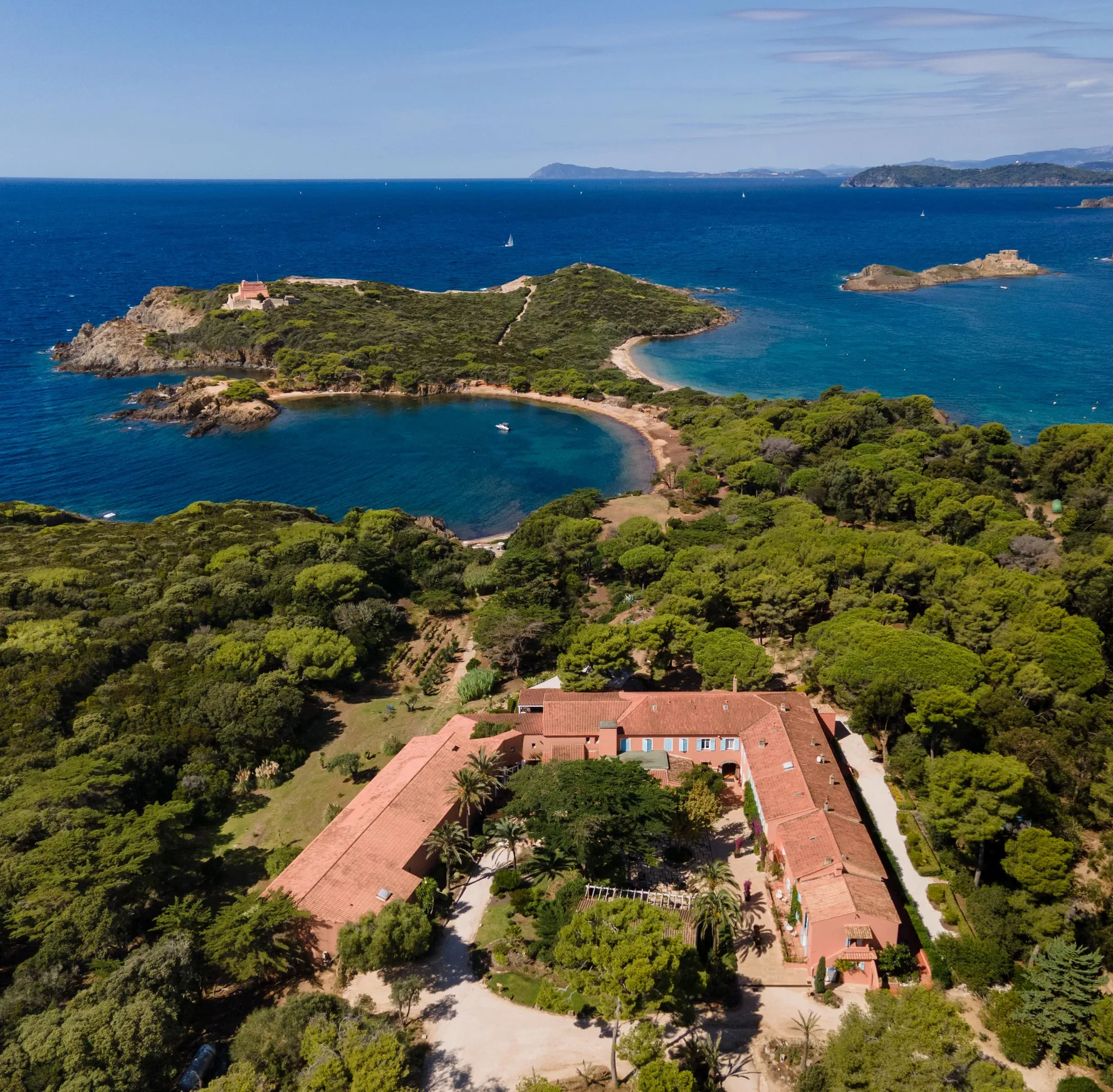
Porquerolles is the largest of the Îles d’Hyères, a little archipelago scattered along the Var coast on the Riviera’s western edge. It is entirely car-free, largely protected as national park, and shaped by an unusually romantic history: in 1912 the Belgian entrepreneur François Joseph Fournier bought the whole island as a wedding gift for his wife, planting its first vines. The result is a Mediterranean island held in an earlier register. One village around a plane-shaded square, vineyards and orchards in the interior, pine forest threaded with sandy paths, and coves of water so clear it hardly seems attached to the same coastline as Saint-Tropez, an hour up the road and a world away.
That is the best way to understand Porquerolles: the quieter, slower cousin of the Riviera you know. No cars, no beach clubs, no spectacle. The kind of place that is easy to overlook, and even easier to fall for.
Getting there
Ferries leave from La Tour Fondue, the small port at the end of the Giens peninsula outside Hyères, and the crossing takes about twenty minutes. You can park at the port, steps from the boat, and a round trip in high season runs around €24. Hyères itself is an hour by regional train from Marseille, and Toulon, forty minutes away, sits on the TGV line from Paris, which makes the island a more plausible spontaneous trip than it first appears.
One piece of advice outranks all others: go early, and go midweek if you can. The island the early boats deliver, with the morning light still on the water and the paths empty, is a different island from the one the late-morning ferries find. Shoulder season is when Porquerolles is most itself; May, June, and September are ideal.
On arrival
The port opens directly onto the village, and the first order of business is a bike. Cars are banned, distances are deceptive, and the island’s whole logic is built around two wheels. Rental shops cluster at the port and a few streets back; expect around €45 for a full day on an e-bike, which is the version to choose. The e-bike is not a luxury here. It is the difference between seeing the postcard beach and reaching the coves beyond it.
From the village, sandy paths fan out across the island, running between vineyards, through pine and eucalyptus forest, and along clifftops on the wilder southern shore. Part of the pleasure of Porquerolles is that getting anywhere is itself the activity.
The beaches
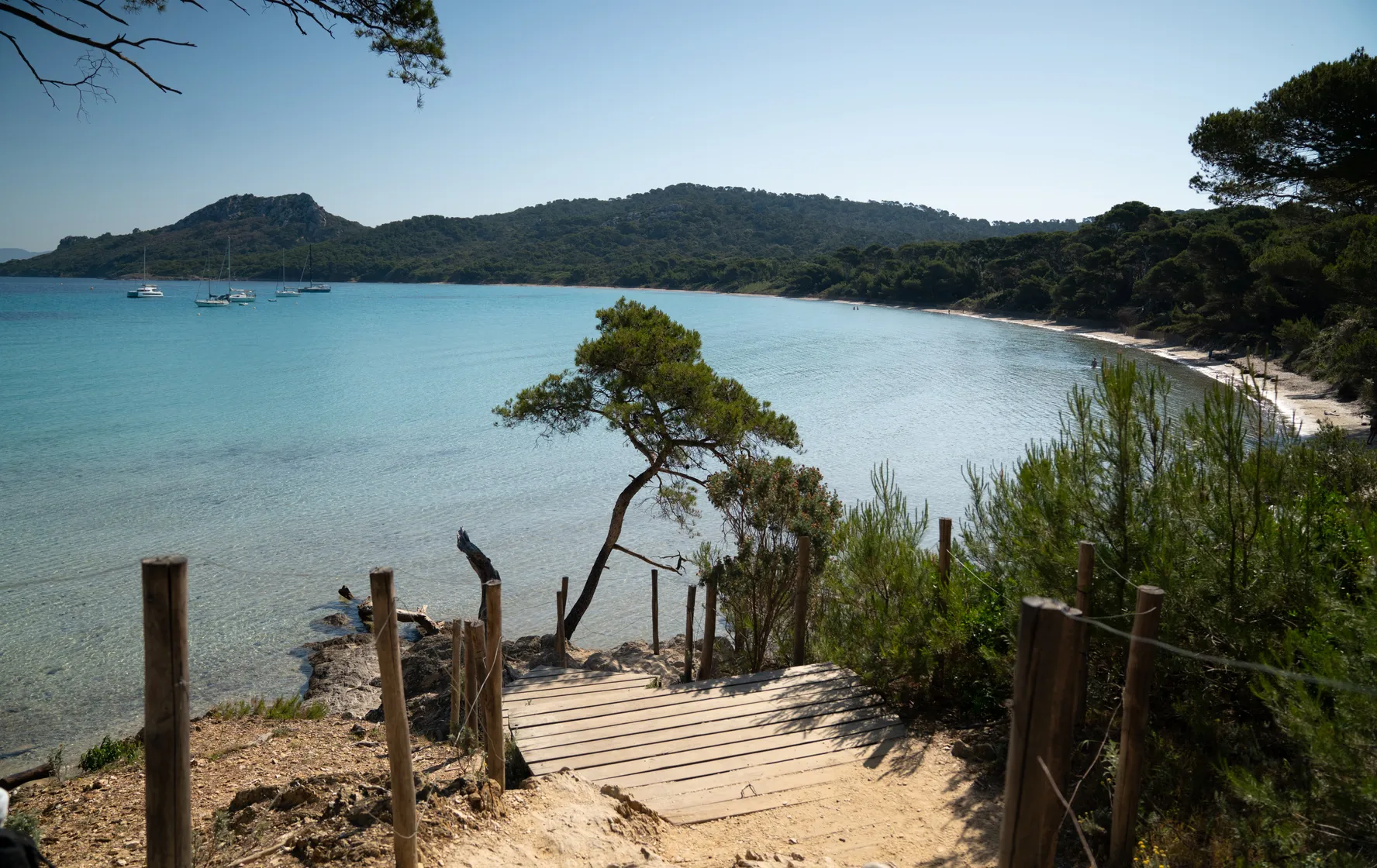
Plage de Notre-Dame, on the island’s northeast side, is the most photographed beach on Porquerolles and the one most visitors aim for first. The beach itself is small, but the cove around it is not: all sand, no rocks, and water that is shallow, clear, and calm. It earns every photo. Arrive early enough and you may briefly have it to yourself, an experience that feels almost illicit this close to the Côte d’Azur.
Plage d’Argent, west of the village, is the serviced option, with a restaurant terrace above the sand and the easiest access from town. It is also the busiest, full of families by late morning. Treat it as a landmark rather than a destination.
The real instruction is this: do not settle for the first beach. Porquerolles rewards anyone willing to ride a little farther for a quieter pocket of sea, and the coastline is stitched with small coves that the foot crowds never reach.
The art
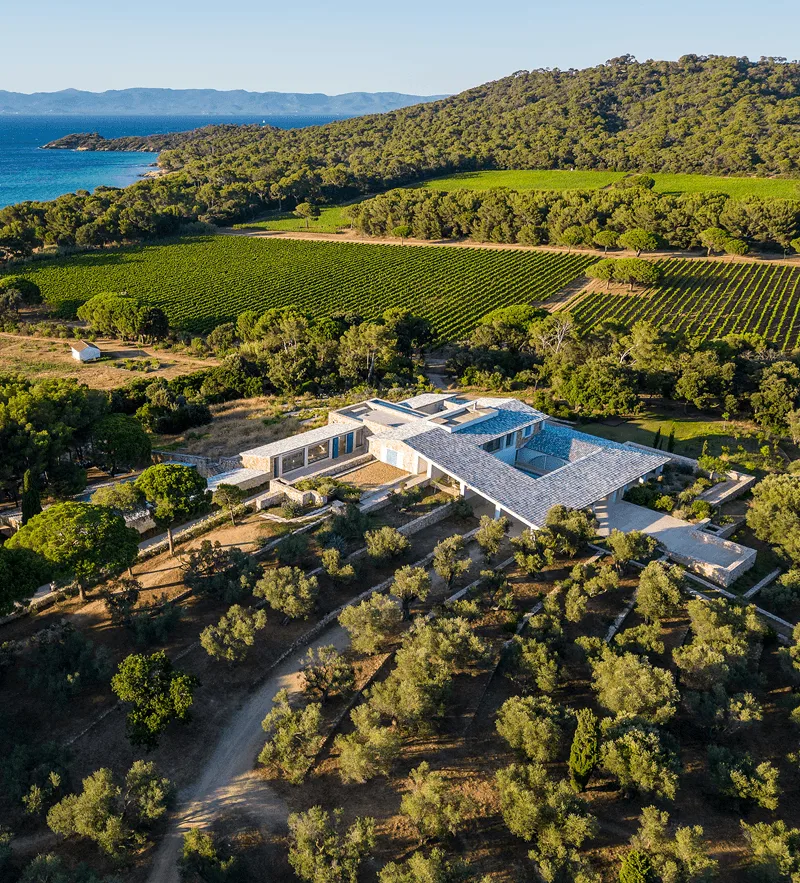
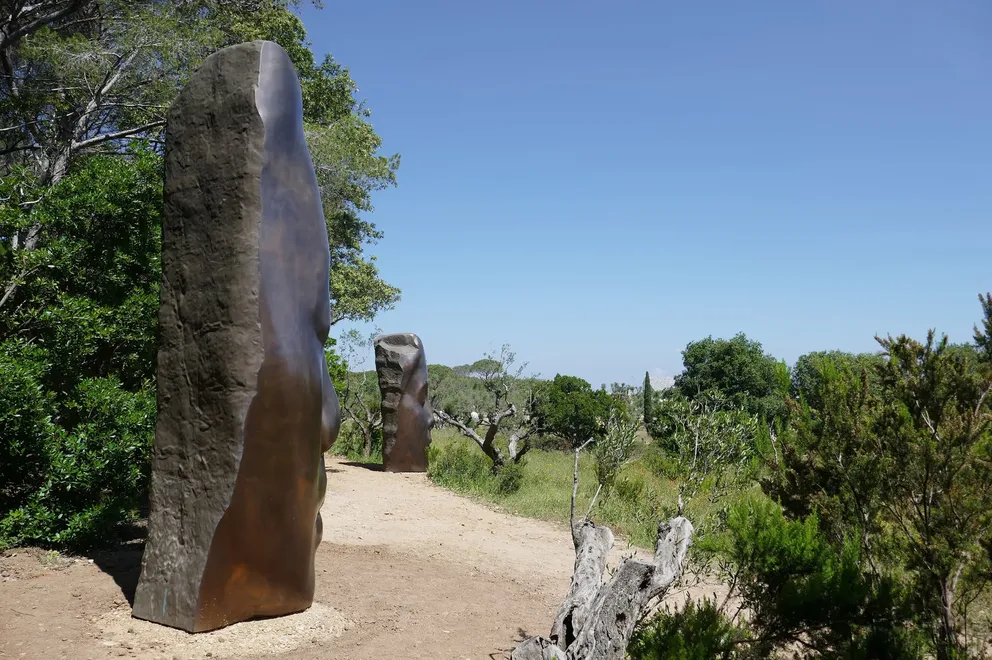
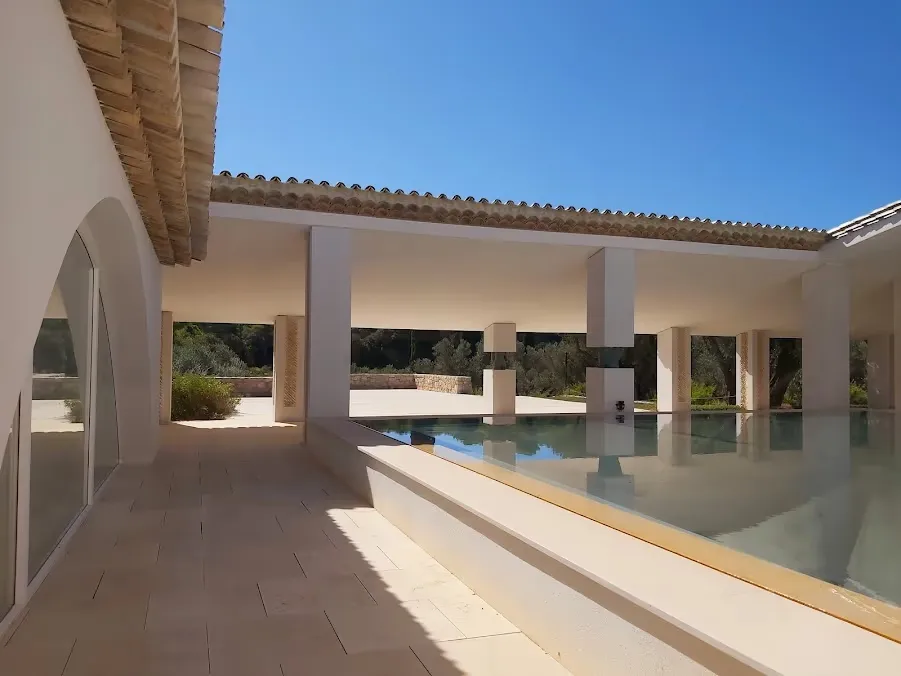
The most surprising thing on Porquerolles is the Fondation Carmignac, a contemporary art foundation set in a protected pine forest above the sea. It is part underground museum, part sculpture park, part wild garden, and it holds one of the more significant private collections in Europe, with works by Warhol, Basquiat, Lichtenstein, and Calder shown in rotating exhibitions beneath a water ceiling that filters daylight across the gallery floor.
The rituals are half the experience. A small cart by the entrance offers a complimentary herbal elixir on the way in and another on the way out, and at the door you are asked to remove your shoes. Walking the cool stone barefoot recalibrates you; it feels less like a museum and more like an extension of the island.
The vineyards
Two working estates produce wine from the island’s own vines, and they make an unlikely, perfect pair. Domaine de la Courtade is the foundation’s sibling, biodynamic, producing over 150,000 bottles of Côtes de Provence a year. Its signature is the Cuvée Immergée, a red and a white aged underwater at thirty meters for six months, precisely the kind of experiment you would expect from an estate owned by a contemporary art collector. Domaine de l’Île is the historic estate, acquired by Chanel in 2019, producing exactly two wines under the direction of the oenologist who oversees Chanel’s other properties. Chanel calls them haute couture wines, and the language fits: two bottles, one estate, deliberate restraint.
Where to eat
The village square does most of the work: unhurried café terraces under the plane trees, seafood restaurants serving the day’s catch, and Le Glacier Porquerollais, the island’s best gelato and the correct final stop before the ferry home. For the occasion dinner, La Pinède at Le Mas du Langoustier serves Provençal seasonal cooking with the sun setting straight into the sea at the western tip.
Where to stay
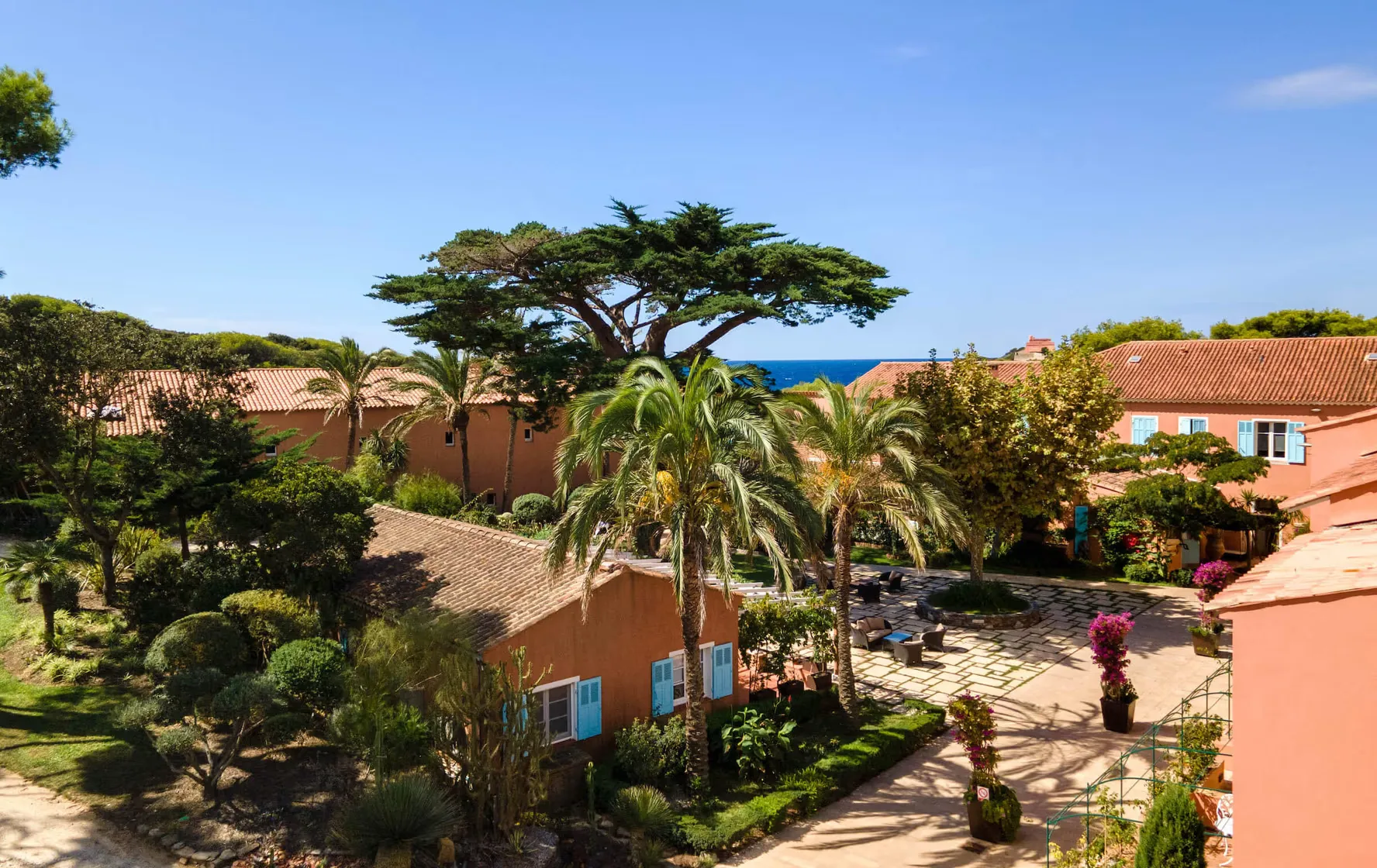
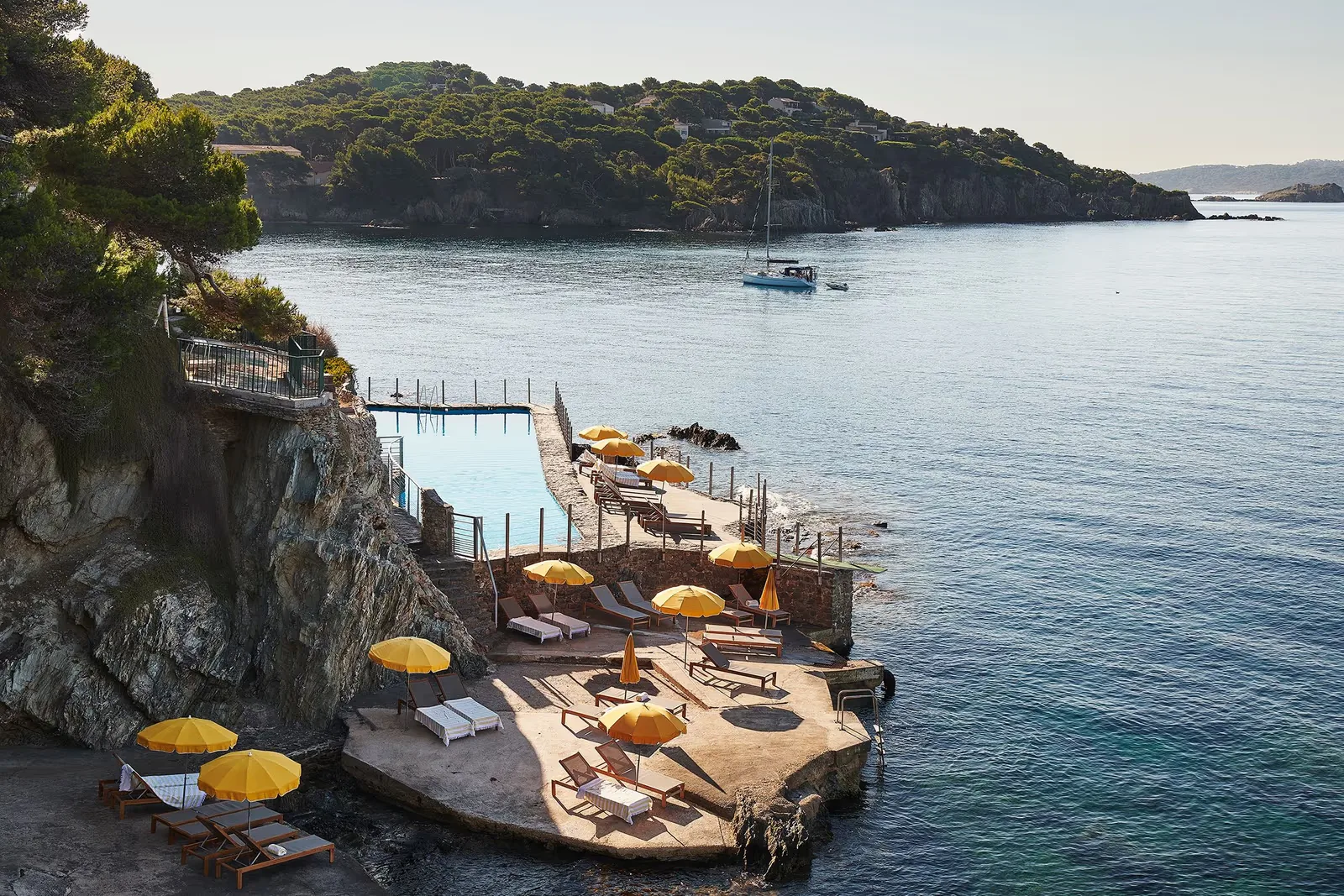
Porquerolles has no luxury hotel scene, which suits the place perfectly. Le Mas du Langoustier, on the pine-covered western tip, is the most refined option, with shuttles to the port; rooms from around €290. Le Porquerollais, a six-room hotel on the Place d’Armes, is the village option, intimate and unfussy; rooms from around €200. The elegant alternative is to stay off the island entirely: Le Provençal in Hyères, renovated in 2025, pairs naturally with a day trip and has a seawater pool cut into the rock.
When to go
May, June, and September, midweek. The island stays open into the evening in summer, with the last ferries returning around 7:30, so there is no need to rush the afternoon. The crowds halve in shoulder season, the water is already warm by late May, and the whole island operates at the speed it was clearly meant to.
Porquerolles will not stay overlooked forever; places this close to the Riviera never do. For now, it remains what the coast itself once was. Go gently, go early, and let it set the pace.
Explore more of our favorite places to stay along the Côte d’Azur.