Destinations
Île de Bendor, the New Private Island in the South of France
Seven minutes off the coast of Bandol sits a private island that had quietly faded for decades before closing for a full restoration. Now reopened as Zannier Île de Bendor, it is the most quietly ambitious thing to happen on this coast in years.

The south of France is not short on islands, but it is short on surprises. The coast between Marseille and the border has been mapped, ranked, and booked for a century. And then there is Bandol, an unhurried seaside town about forty minutes from Marseille and twenty from Cassis, the kind of place people who know the region love precisely because most people overlook it. Seven minutes off its harbor, by a boat that runs every half hour, sits a private island most travelers have never heard of and, until recently, could not have visited if they had.
Île de Bendor is small enough to walk in twenty minutes and layered enough to hold your attention far longer. It was bought in 1950 by Paul Ricard, the Marseille-born creator of the anise-flavored pastis that became the defining drink of the south of France, who turned an uninhabited rock into a gathering place for art and Mediterranean life. It slowly faded over the decades that followed, and in 2021 it closed for a full restoration. This May it reopened as Zannier Île de Bendor, a five-year revival led by Ricard’s great-grandson Marc de Jouffroy and Arnaud Zannier of Zannier Hotels, whose hotels are built on a philosophy of mastered simplicity: building around a place rather than imposing on it, using natural materials that feel as though they have always been there. The result is a private island that reads less like a resort than a small, complete world, and one of the more interesting openings the Riviera has seen in years.
Getting there
The island is reached by boat from Bandol harbor, a crossing of about seven minutes on a shuttle that runs every half hour. It feels less like a ferry than a private launch, open to the air with wooden benches along the back, and the frequency means the island never feels remote: you can hop over for a long lunch and back again without ceremony. Bandol itself sits on the regional rail line, with Marseille forty minutes west and Toulon close to the east, which makes the island far more reachable than its privacy suggests. If you make the trip into the city, our Marseille city guide covers where to eat, drink, shop and stay. For arrivals worth slowing down for, hotel guests are met by a smaller private boat.

On arrival
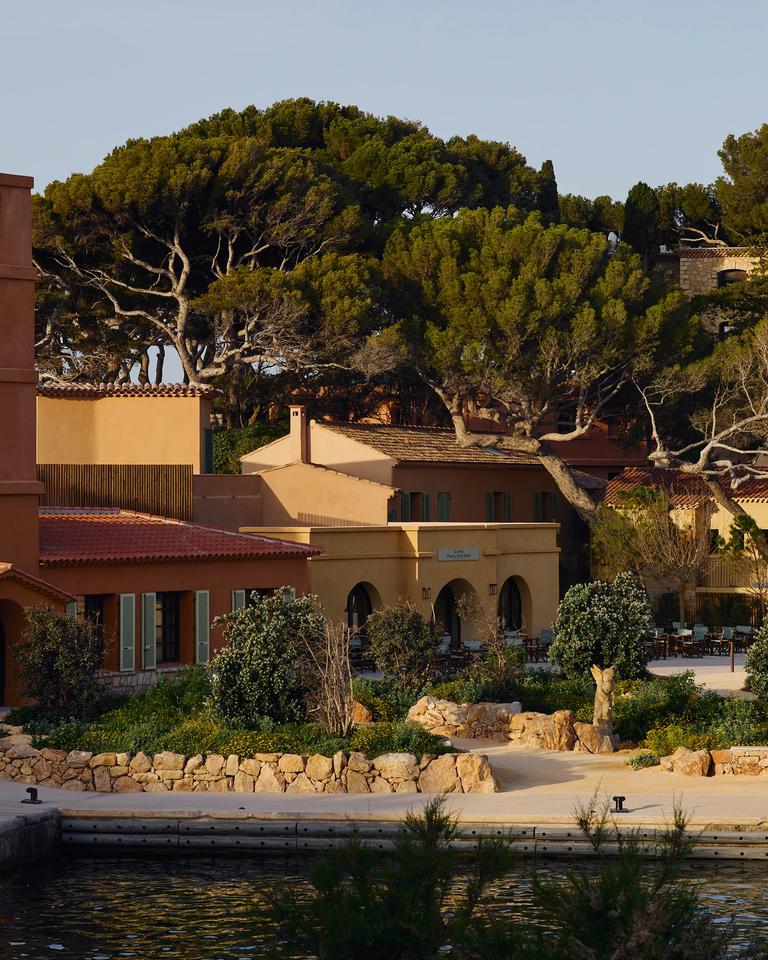
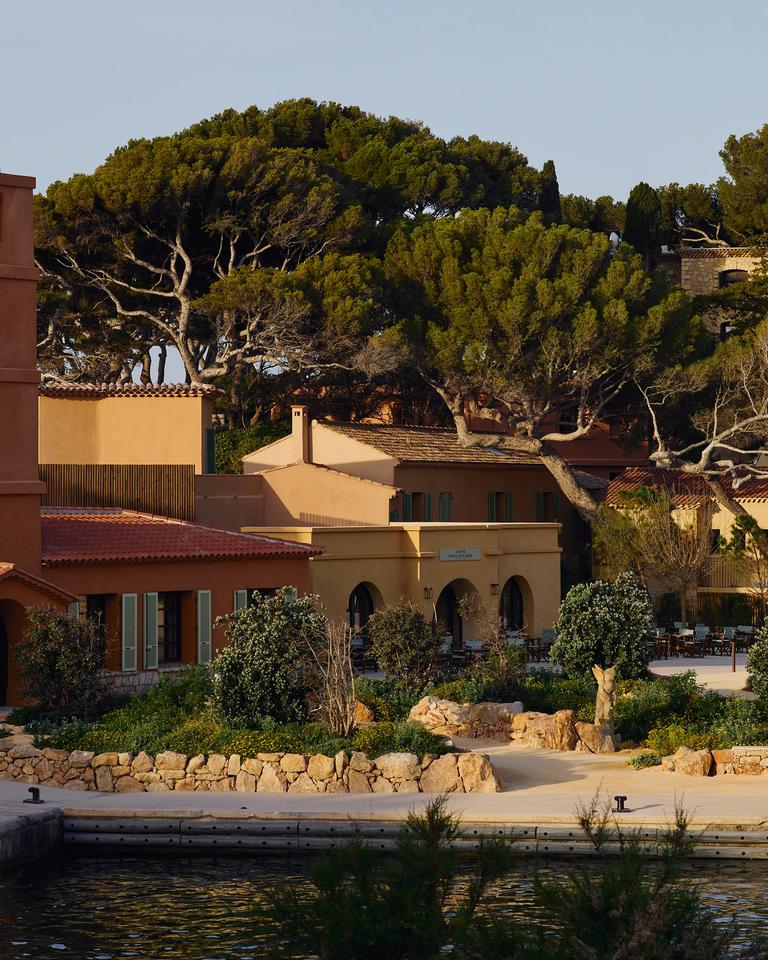
As the boat closes the short distance, the island assembles itself into something deliberately unhurried: former fishermen’s houses around the harbor, clear water, and no cars anywhere. Nothing sits more than a ten-minute walk away, and complimentary electric buggies, chauffeured if you need them, cover the rest. The hotel is organized into three distinct quarters rather than a single building. Delos draws on the spirit of the 1960s Riviera; Soukana is built around wellness; and the Madrague Houses, the former fishermen’s cottages along the harbor, come with private gardens. Between them sit just over ninety rooms and suites, which is the right number for a place that wants to feel like a village rather than a hotel.
At the entrance you will find the reception and a café serving drinks, crêpes, and ice cream. From there the island opens toward its center, and the temptation is to keep walking.
The restaurants
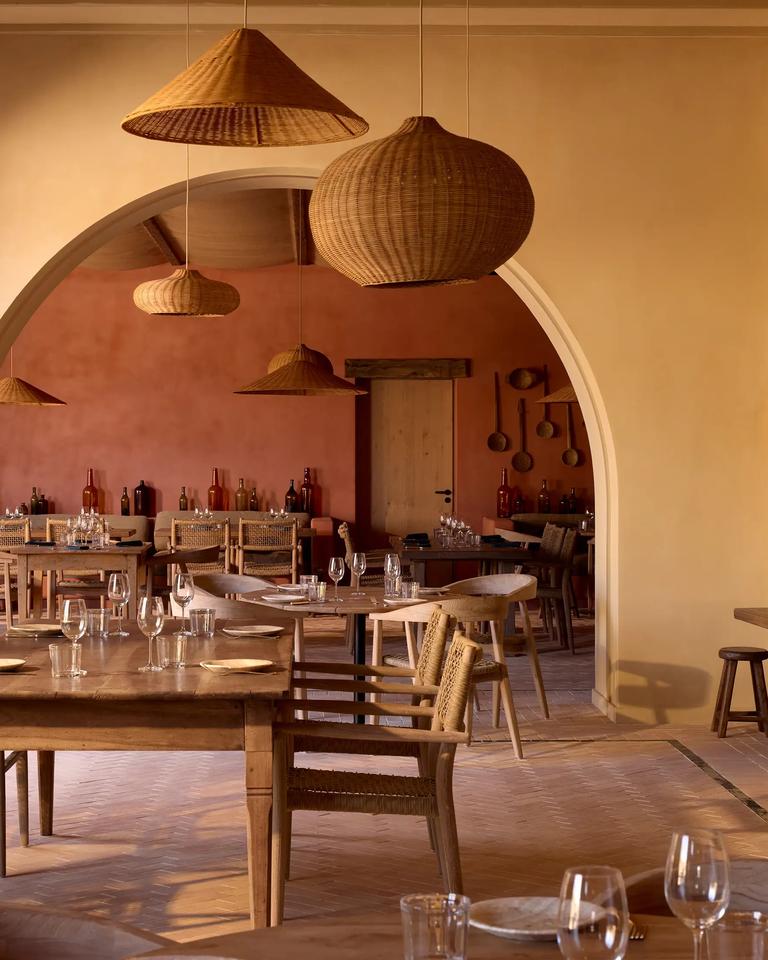
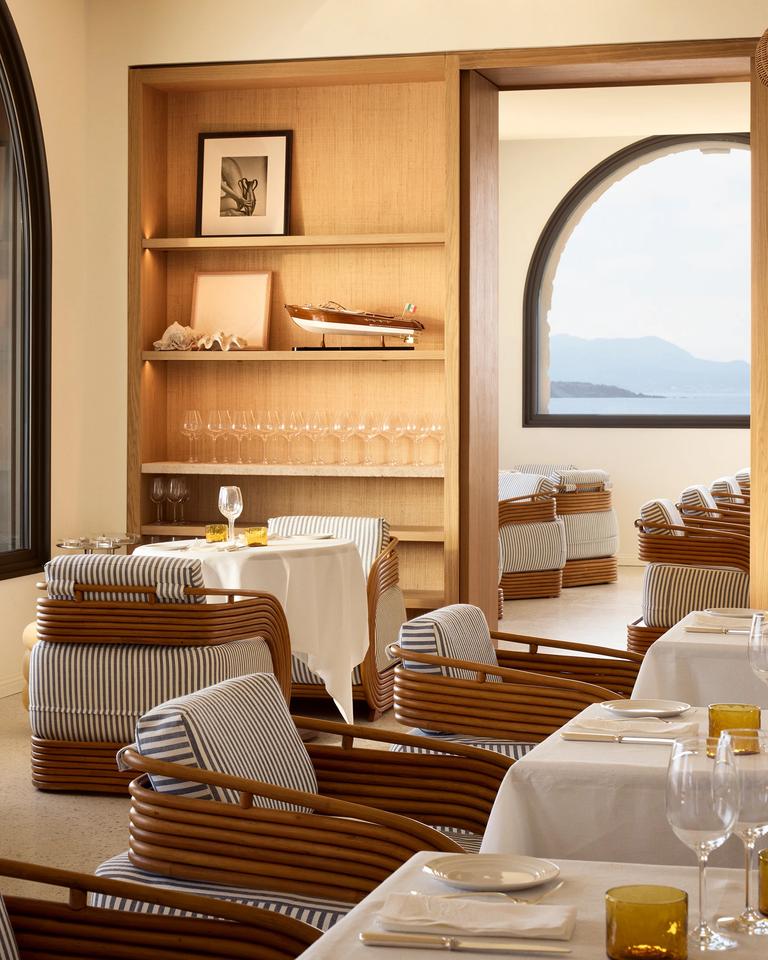
For an island this size, the range is disproportionate: eight dining spaces in all, three of them proper restaurants guided by the Michelin-starred chef Lionel Lévy, each room pitched at a different hour and mood.
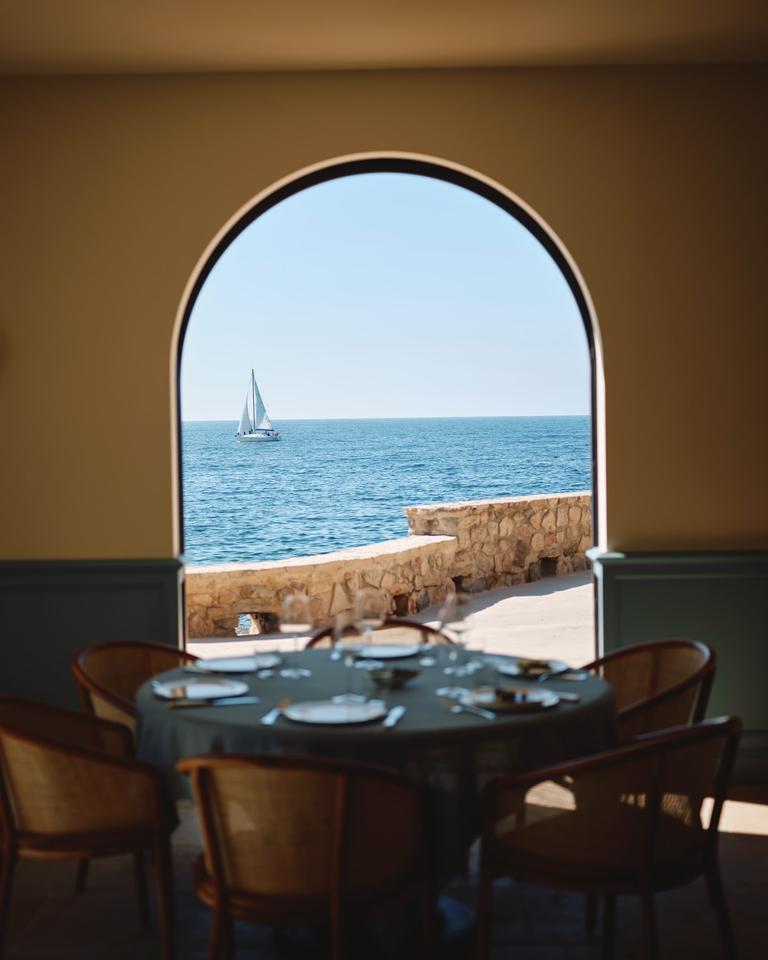
Café Paul Ricard is the casual anchor, near the harbor, a place to drink a pastis and order crêpes, waffles, and ice cream through the afternoon in traditional Provençal style. Nonna Bazaar, the largest table on the island, sits at its center beside the beach cove and the pétanque pitch: a brasserie of Mediterranean sharing plates, wood-fired pizzas, and tagines, with a DJ on Fridays and live music on Saturdays, the second outpost of a concept born in Menorca. Beside it, Bar Patrick pays tribute to Paul Ricard’s son and runs a smaller, more intimate all-day menu, made for a long lunch or a sunset aperitif. Le Grand Large is the island’s historic gastronomic room, set above the sea with a rotation of visiting chefs each season: the reservation you make when you want to dress up. Delos Table and the Delos Cocktail Bar capture the full 1960s Riviera glamor, all-day dining beside the main pool with chic interiors and signature cocktails. And Soukana, in the wellness quarter, serves lighter Asian-fusion cooking with paired cocktails, its rooftop terrace the best position on the island for a sunset drink.
The coastal path
The best of Bendor is free and on foot. A seaside path traces the back half of the island, beginning near the brasserie and climbing past a statue of Neptune and an archway that frames the open sea. From there it threads along the quieter shore, past sea ladders and small coves, with stairways and discreet entry points where the coastline briefly becomes yours alone. It recalls the great Riviera walks, the kind around Saint-Jean-Cap-Ferrat, compressed onto an island you can cross in minutes. It is the part of Bendor most worth getting lost in.
The spa
For a small island, the facilities are serious, and set to be among the largest wellness offerings in the region. The spa runs to indoor and outdoor pools, with a hammam, cold bath, mud bath, and a full menu of treatments drawing on Ayurveda, traditional Chinese medicine, and naturopathy. Beyond it there is a yoga and Pilates studio, a fitness center, tennis, pickleball, the obligatory pétanque, and a roster of water sports that suits the setting: a diving center, snorkeling, kayaking, paddleboarding, and sunset sails.

The artisan village
Ricard built Bendor as a place for art, and that intention survives the renovation. The island holds a dedicated gallery with over two hundred works displayed across its buildings, and an artisan village where ceramicists, textile artists, embroiderers, and designers work in residence through the season. You can visit the studios, watch the work in progress, or join a weekly workshop; private sessions are available for those who want to go deeper. It is the rare hotel amenity that gives an island a reason to exist beyond the view.

Where to stay
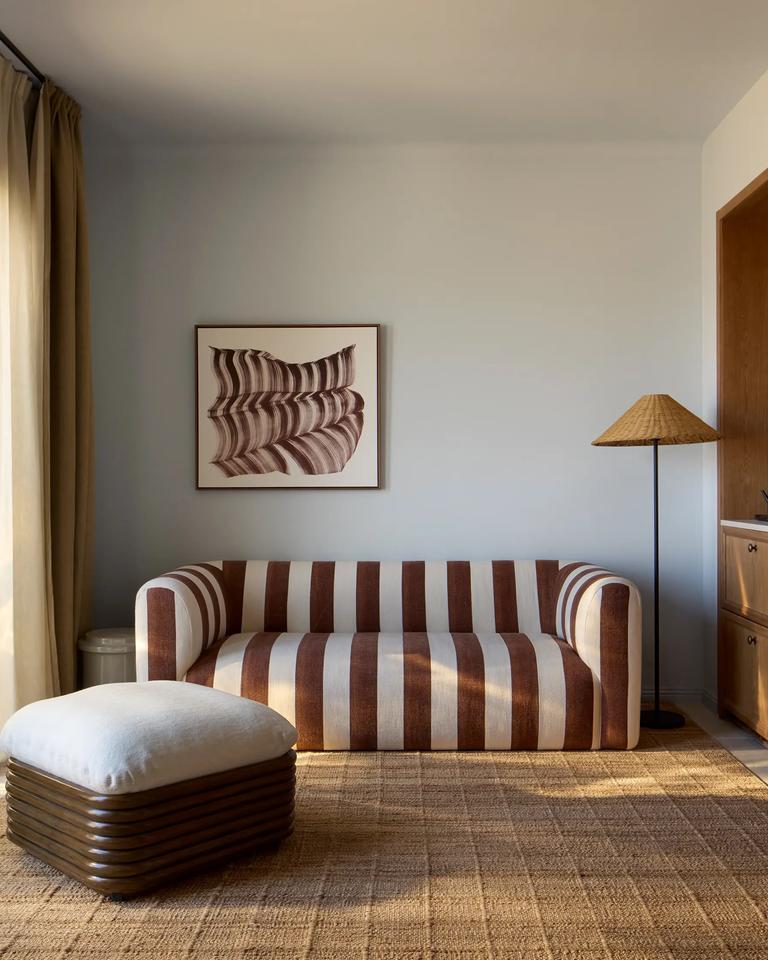
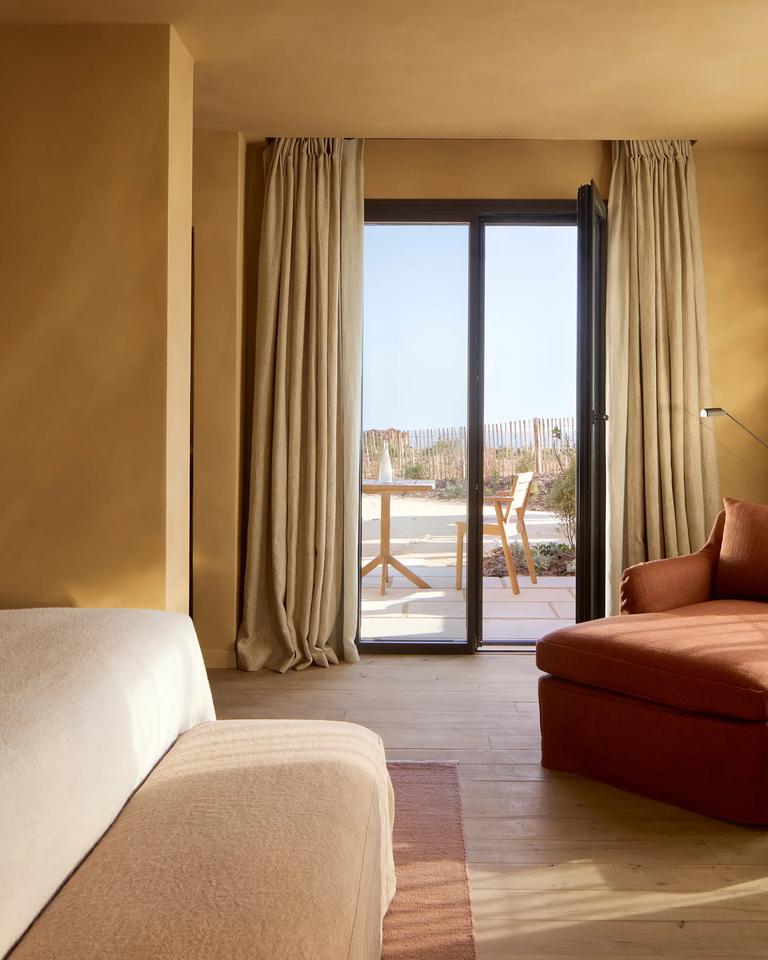
The accommodation divides along the island’s three characters. Delos is the design statement, 39 rooms drawn from the 1960s Riviera in striped textiles and clean color. Soukana is the wellness wing, 49 rooms in earthier tones, lighter and quieter. The five two-story Madrague Houses are the former fishermen’s cottages along the harbor, the most private of the three, each with its own garden. Rooms start from around €620 per night in the shoulder months and closer to €745 in high summer, breakfast and boat transfers included, with suites running higher. The island operates seasonally, from May through October. For travelers not staying over, the better move is a restaurant reservation or a spa day, with the coastal path and the artisan village built around it.
When to go
Bendor runs from May through October, and the shoulders of that window are the reward. Opening days aside, the island is calmest early in the season and late, when the light is long and the crowds thin. Come for a day if a stay is more than you want; the boat runs often enough that an afternoon is easy, and the island gives up its best corners, the coastal path, the rooftop at sunset, the quiet end of the harbor, to anyone willing to wander past the obvious.
What Bendor offers is not novelty but a quieter version of a coast that long ago stopped being quiet. For now, seven minutes from Bandol, it remains a world of its own.
Explore the island and book a stay at Zannier Île de Bendor.


