Destinations
A Look Inside Tuba Club, the Table to Book in Marseille
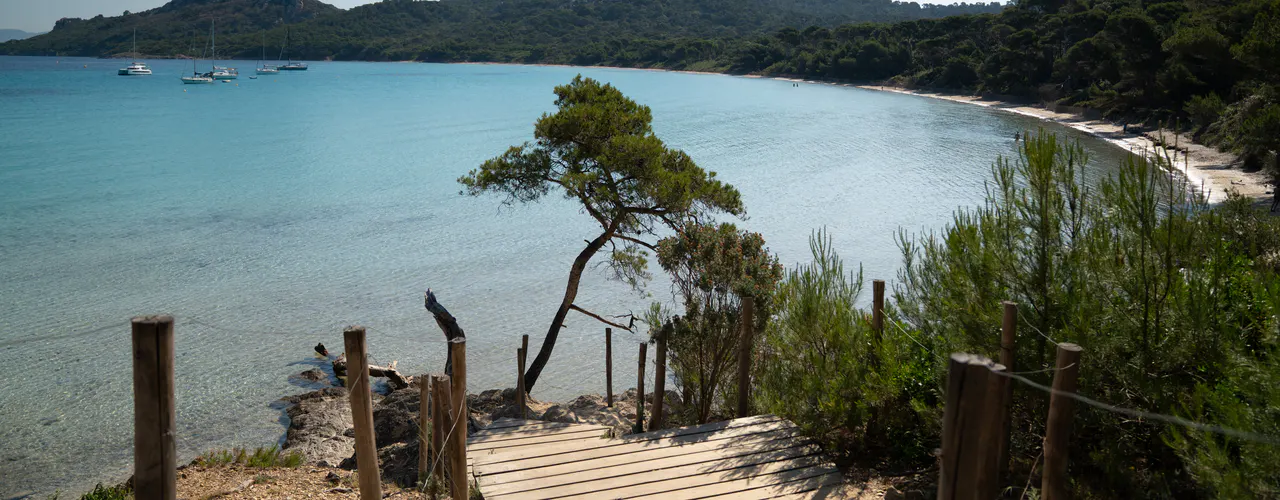
Along the seaside road in Les Goudes, where Marseille ends and the calanques begin, Tuba Club, a former diving school, serves fish straight off the morning boats at tables set into the rocks.

Marseille keeps one of the most coveted tables in the south of France at its far edge, where a former diving club serves the day’s catch at tables set out on the rocks of the shoreline, a few steps from the open sea. Tuba Club has quickly become one of the defining addresses of the Marseille summer.
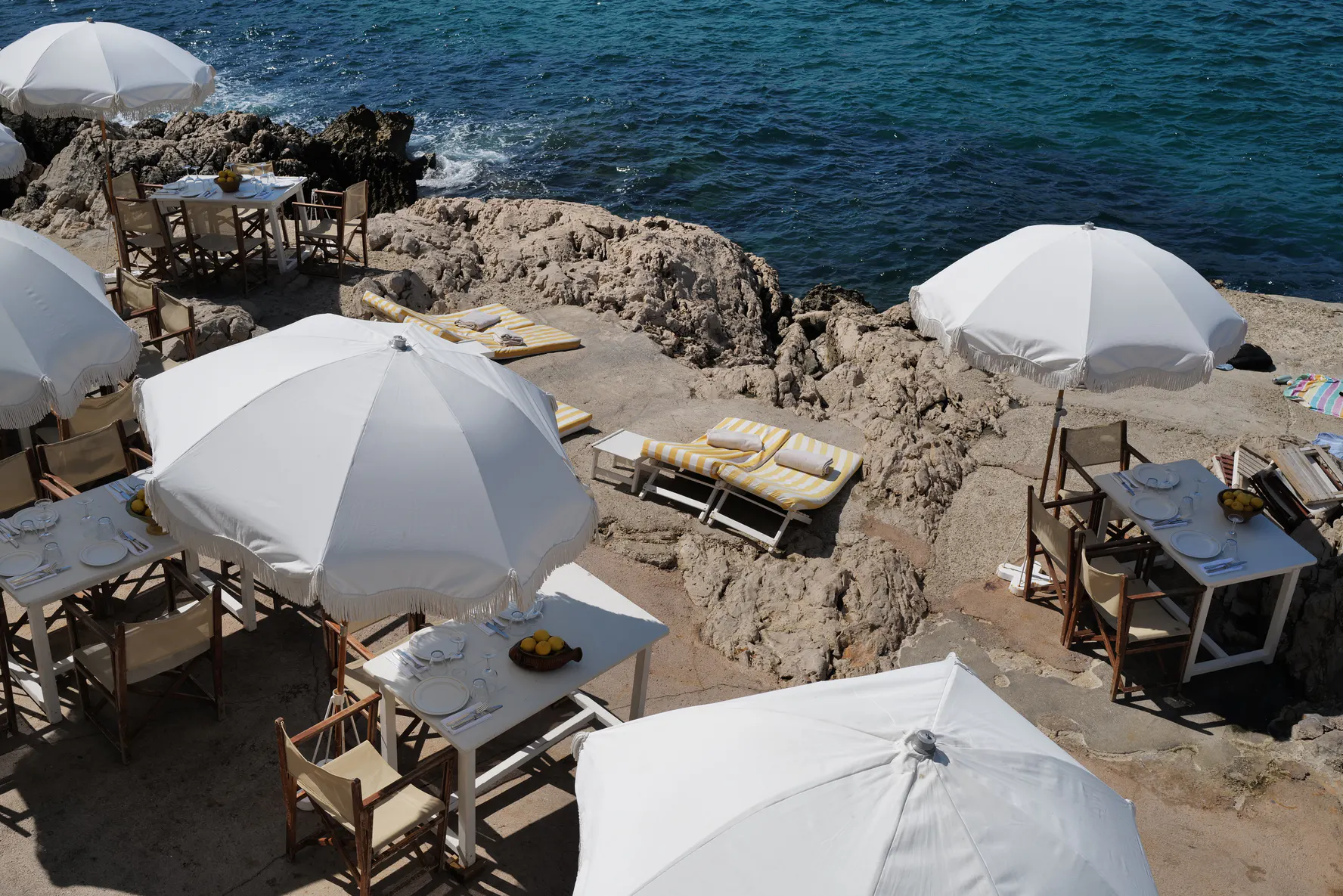
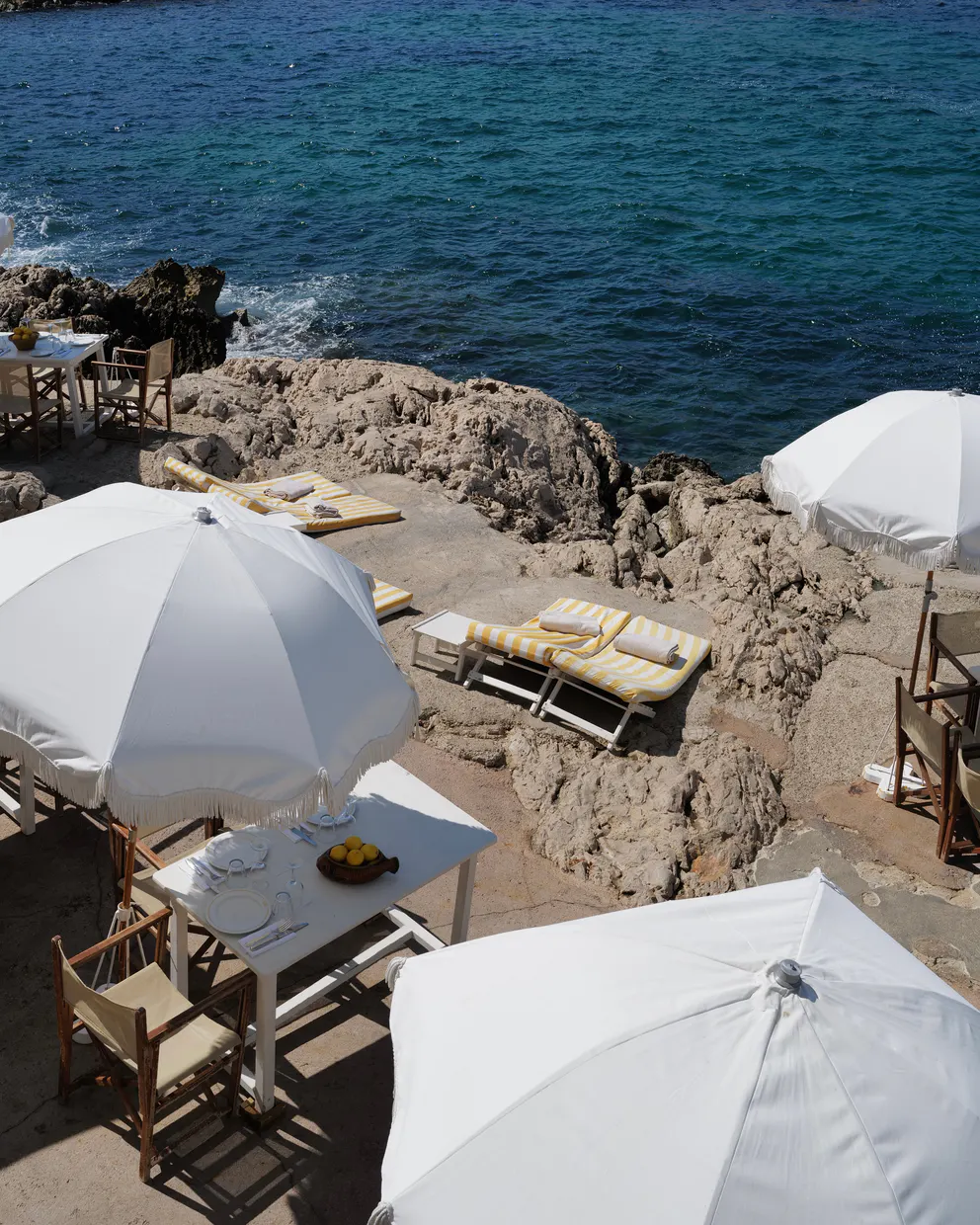
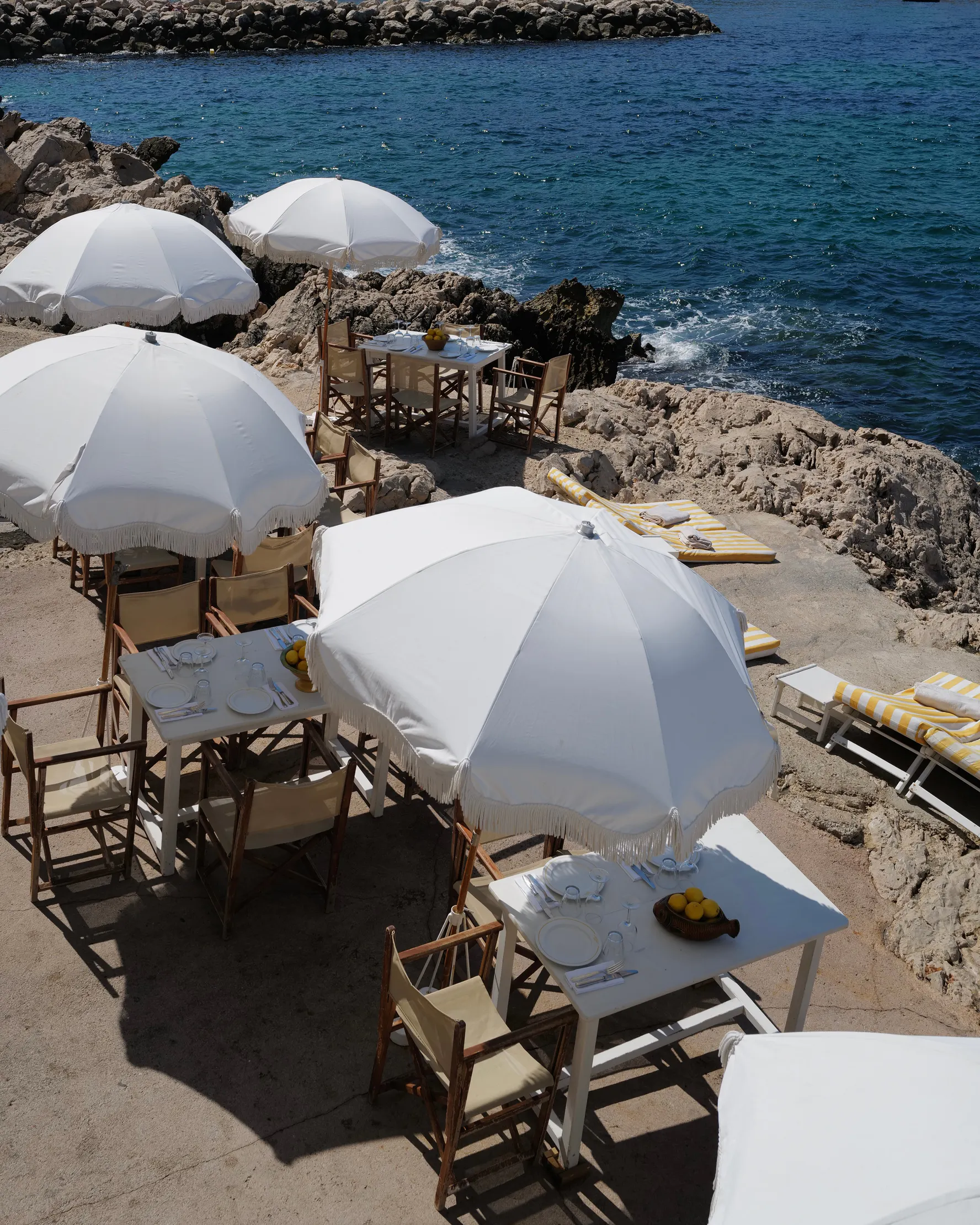
It sits in Les Goudes, the last fishing village on the corniche road out of the city, where the limestone of the calanques meets the water. The setting does most of the introductions: white parasols and canvas chairs scattered across the raw rock, a ladder into the sea for a swim, the harbor to one side and open water directly below.
A building with many lives
Tuba opened in 2020 in a building that has lived several lives: a fisherman’s cabanon over a century ago, a small hotel in the 1940s, a nightclub in the 1970s, and in the 1980s a diving club whose regulars included Jacques Mayol, the free diver who inspired Le Grand Bleu. The name keeps faith with that chapter, tuba being French for snorkel.
It was brought back to life by Grégory Gassa and Fabrice Denizot, two friends who grew up in Marseille and spent long careers away from it, Gassa in fashion and then restaurants, Denizot producing films.
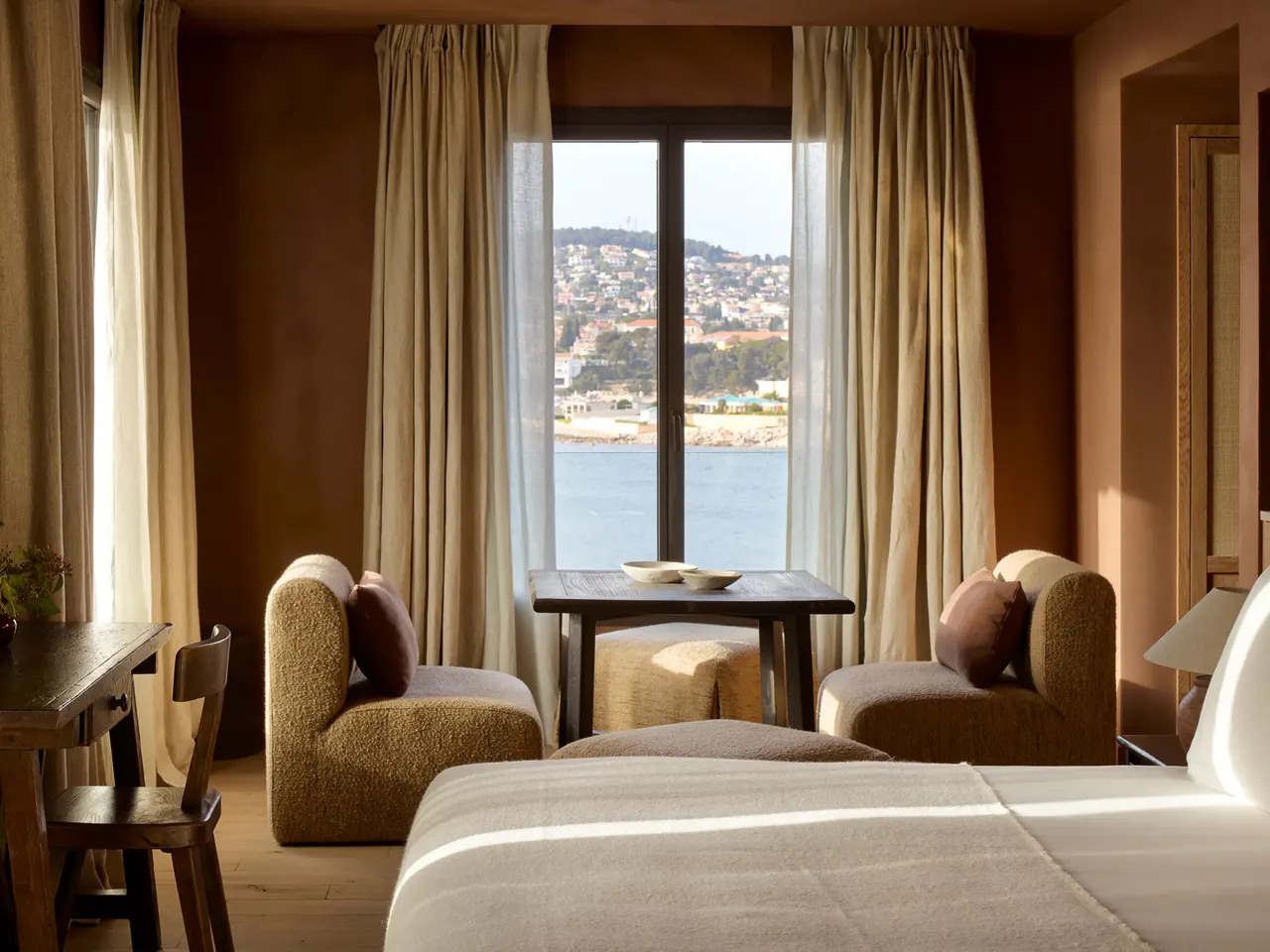
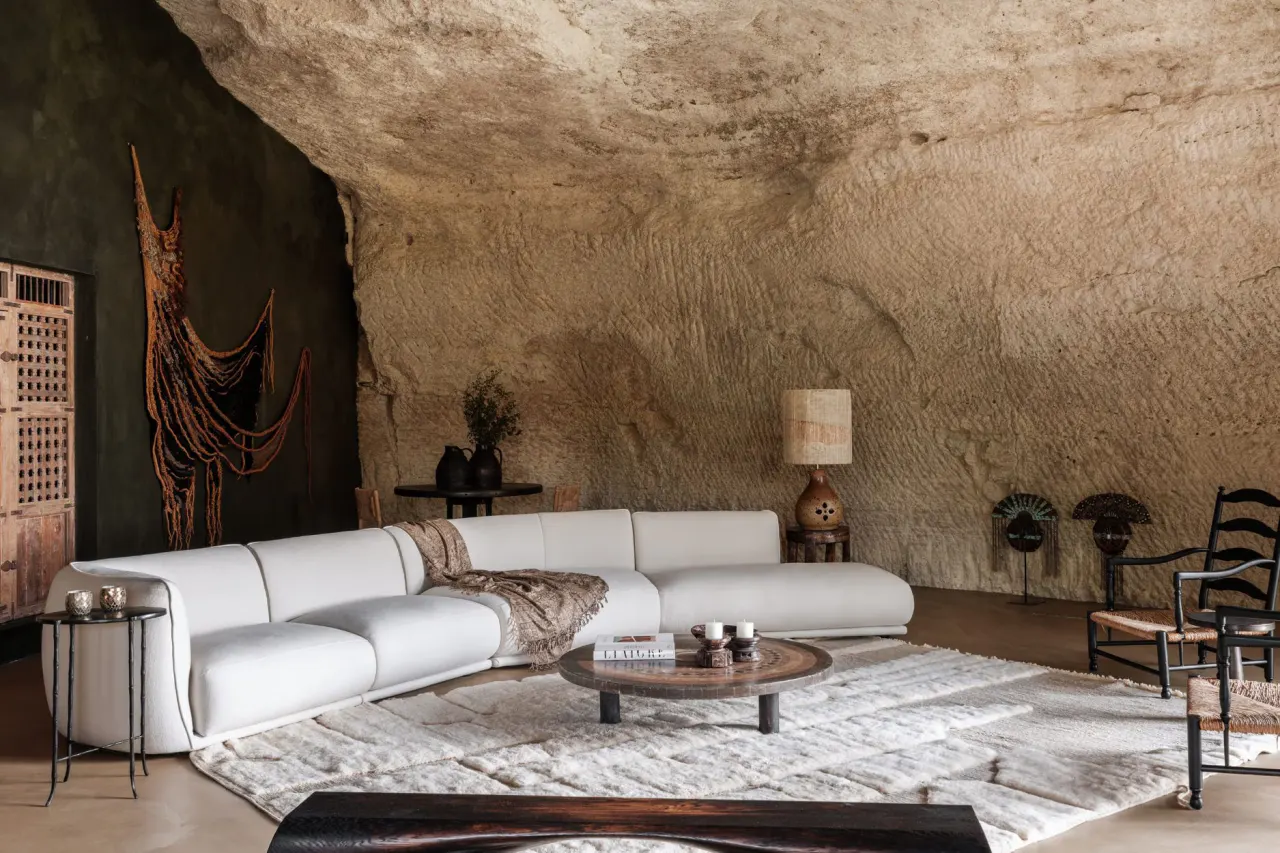
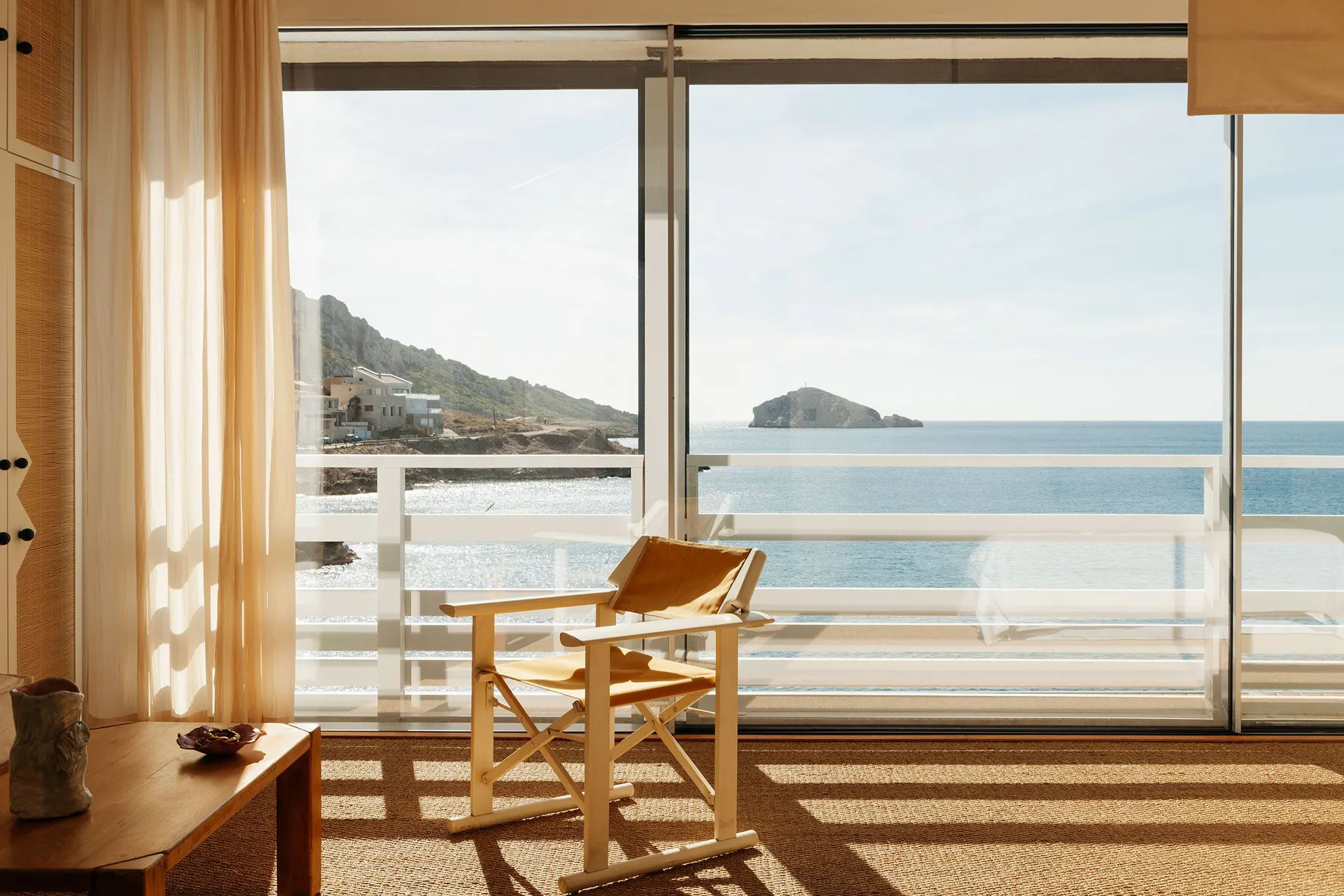
The restoration is the work of Marion Mailaender, the Marseille-born interior architect, who kept the diving club’s original bar and staircase and dressed the rest in the language of the coast: white-painted wood, local stone, sea grass, rope. Five cabin-style rooms overlook the water, minimalist in a way that reads as an ode to Le Corbusier’s Cabanon, joined more recently by three larger rooms in a villa above.
The past is kept close. The diving school’s old tables were repainted rather than replaced, the bar where Mayol drank with the diver Albert Falco is dressed in locally sourced reed matting, and a rubber snorkel from the 1970s is still displayed on the counter. In the rooms there are no bathrobes or slippers; each comes instead with a kit of flippers, a mask, and a snorkel.
The restaurant
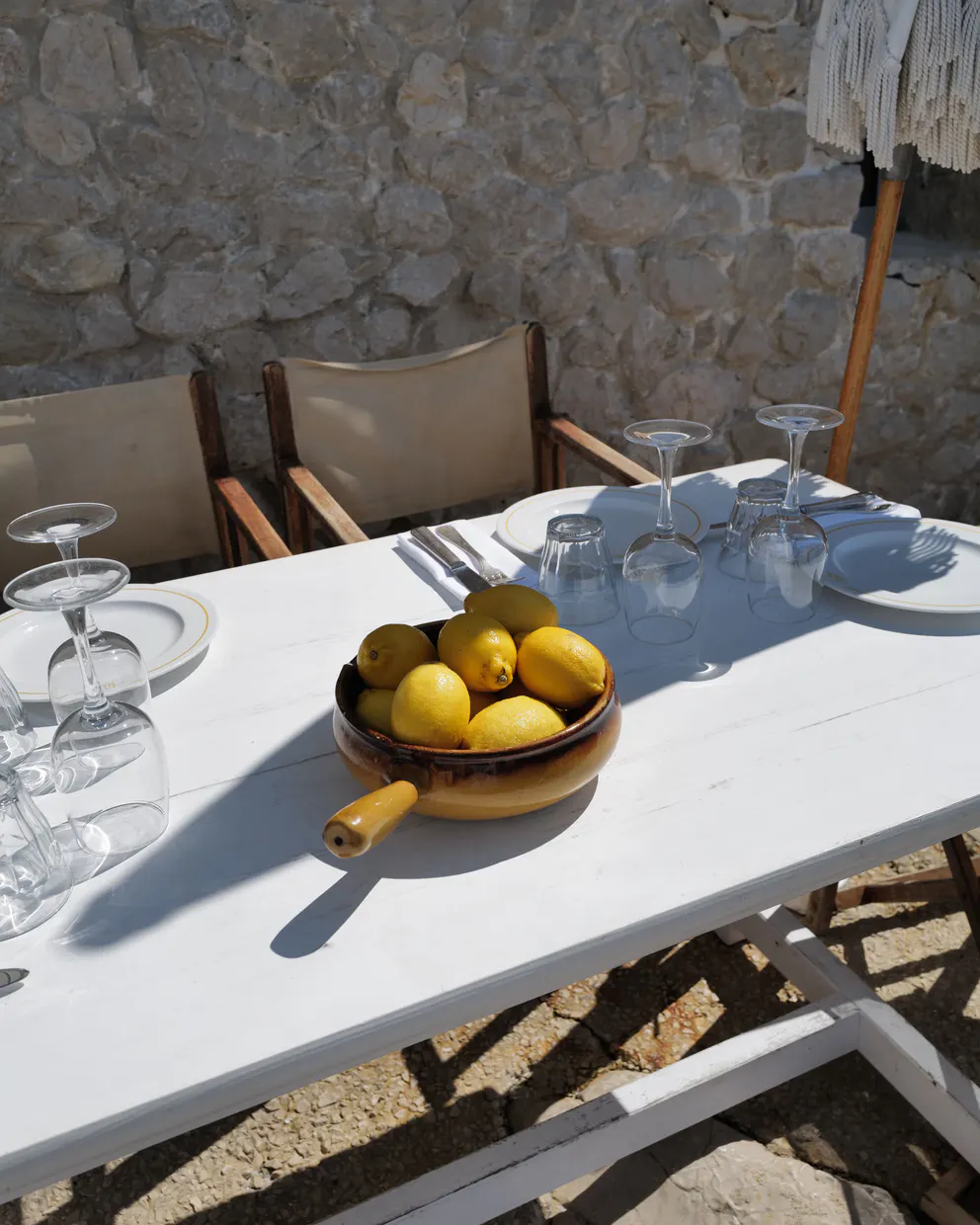
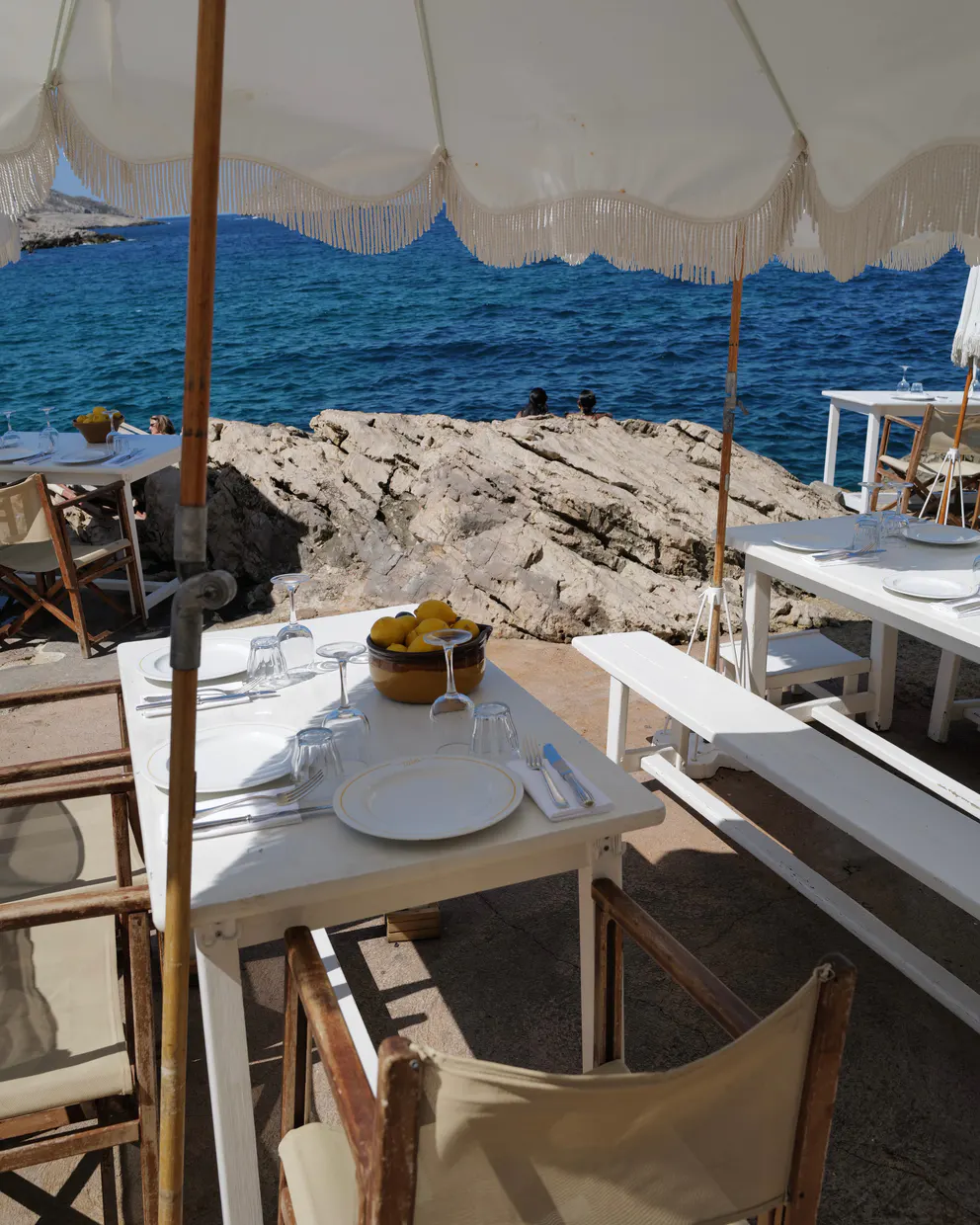
The restaurant seats eighty across a cabanon-style dining room and two terraces above the calanque. The kitchen is run by Sylvain Roucayrol, who is also behind Ciccino in the city center. The cooking is built on fresh fish and the catch of the day, and local fishermen still pull up to the rocks to sell the kitchen their morning haul. Upstairs, Bikini, the roof terrace, opens from April to September for Mediterranean plates to share, natural wines, and a selection of vermouths.
What to order
We recommend something cold to start, the oysters or the carpaccio, then the day’s fish, the sole in particular, barbecued to a perfect char. The madeleines, served warm, are the perfect finish. Whatever you order, you can’t go wrong. The rest of the menu earns its place; truthfully, everything is good.
When to go
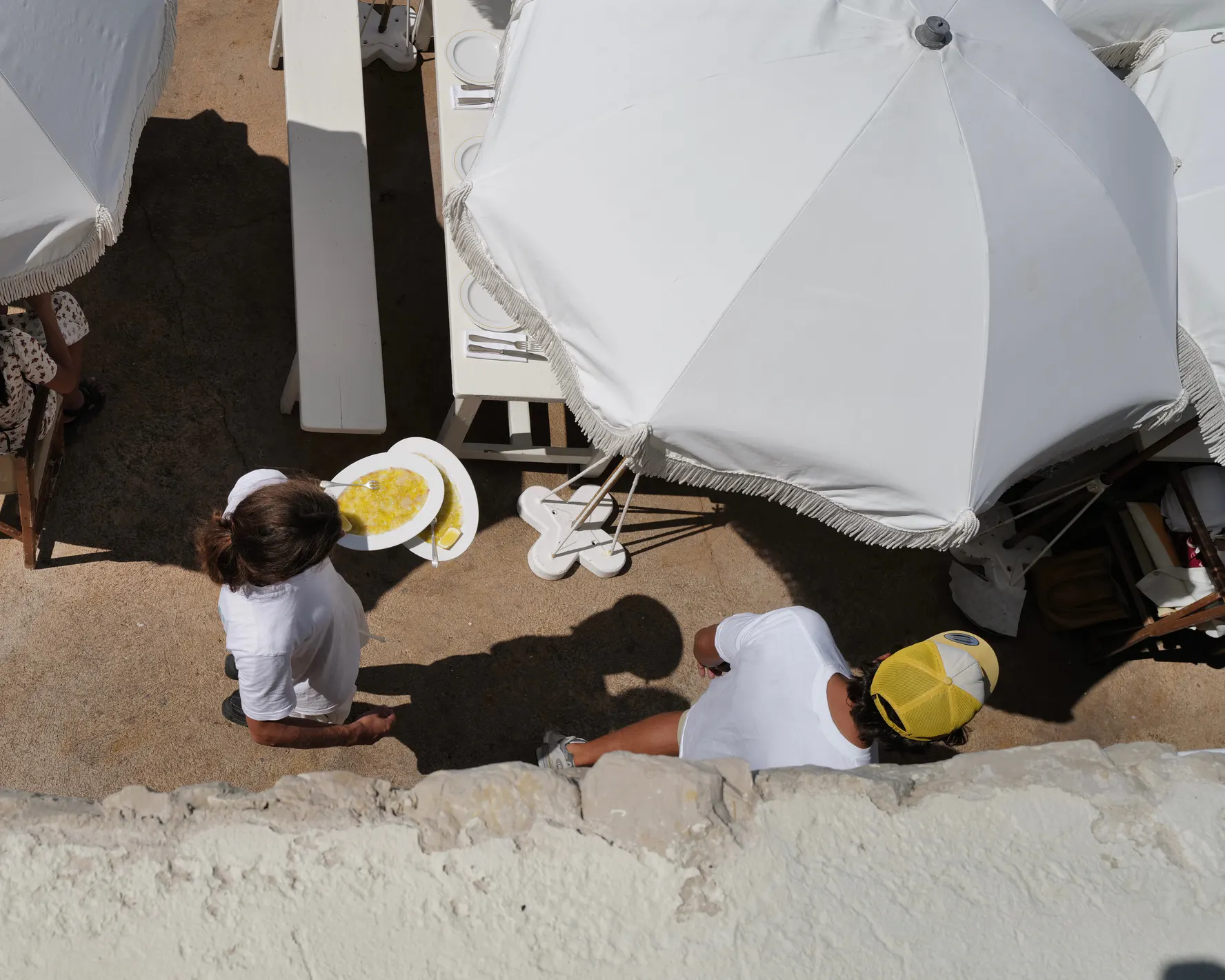
The shoulder season is the best time to go. In June and September there is room to breathe, and by September the sea is at its warmest; of the peak months, July is the calmer of the two.
Lunch and dinner are two separate occasions. At midday the rocks double as a bathing spot, swimmers drying off in the sun, and the place runs on salt and glare. In the evening the light softens, dinner turns romantic, and late summer brings the longest sunsets.
Things to know
Reservations are required. In peak season book in advance; in the shoulder months a week ahead, sometimes even the week of, will do. Lunch runs from 12:15 to 2:15 and dinner from 7:30 to 9, first to last seating.
The tables down on the rocks are the most coveted, and in high summer they are reserved for hotel guests, with exceptions sometimes made for groups.
Parking is scarce, so account for it. If nothing is free by the restaurant, there are spots within a ten minute walk, bikes and scooters to rent in the area, and Ubers and taxis run from the city.
Making a trip of it
It is priced as the destination it has become, edging a little higher each summer as the reputation grows. It also remains one of the most beautiful tables in France, and worth the trip on its own.
Les Goudes sits at the gateway of the Calanques National Park, and a lunch here pairs naturally with a stay along this stretch of coast. On the far side of the park lies Cassis, where Les Roches Blanches and Le Domaine de Canaille both make a base worth planning a trip around.